A Georgian Journal (Part III – Kakheti: Georgian wine, monasteries and bears roaming in the wild)


In Part II, I mentioned that Georgi is by far the most common name in Georgia, and that we met many many Georgis, all using different variations of the name, while we were travelling around the country. However, the most important Georgi of our lives was (and remains to this day!) Gigi, who showed us around his beautiful country, shared his stories and raised countless toasts with us, and opened his heart and his home to a funny trio struggling to pin down their geographical origin.

Gigi picked us up from our beautiful run down Tbilisi home on 31 May and we set for Kakheti, the famous wine region in the east of Georgia. It was the Police Officer Day in Georgia, so the traffic was heavier than usual but, once we got out of the city, the road was fast, the conversation flowed and we were admiring the sea of green through which the road was taking us. The hills we drove through were green and luscious, it was a warm day with a glorious sunshine, and, although we hadn’t yet reached Kakheti, it really felt like we were in some wine growing region of Italy — we even passed a sign to a village called “Verona”! Gigi was witty, funny and knowledgeable, and spoke impeccable Russian and fluent English. We talked about all sorts of things — politics (*how the Svan mafia (from the Georgian region of Svaneti) ran everything in the country until 2004, until Mikhail — “Misha” — Saakashvili, Georgia’s (much loathed) former president now hiding in Ukraine, came to power, and his brutal ways), ethnography (*that Georgian surnames ending with “vili” (e.g., Saakashvili) originally come from Kakheti, whilst those ending with “dze” (e.g., Shevardnadze — another former president of Georgia) — from the Georgian region of Racha), culture (*about the famous director Sergei Parajanov, who was born in Tbilisi and whose 1968 film The Colour of Pomegranates is considered by some the best film ever made) and Georgian wine making (*about the ancient Georgian wine making tradition called “Qvevri“; qvevri is a wine vessel made of clay and covered with a layer of beeswax inside, completely buried in the ground).


Qvevri in one of the wineries we stopped by in Kakheti

We honestly could not have asked for a better, more passionate and more knowledgeable person to continue our romance with this mesmerising country. As we drove, Gigi kept playing this song:


It was a beautiful and very philosophical song I had not heard in very long time. It was absolutely perfect for our Georgian road trip.


“…Two dreams and a glass of sorrow
We, revived, have drank in full.
I don’t know why I was given to you.
I am ruled by the moon-road.
Don’t you cry, if you can – forgive.
Life – isn’t sugar, and death – isn’t tea.
I must carry my own road.
So long, friend, and goodbye!
 
That is all that will remain after I’m gone,
That is all that I will take with me.”
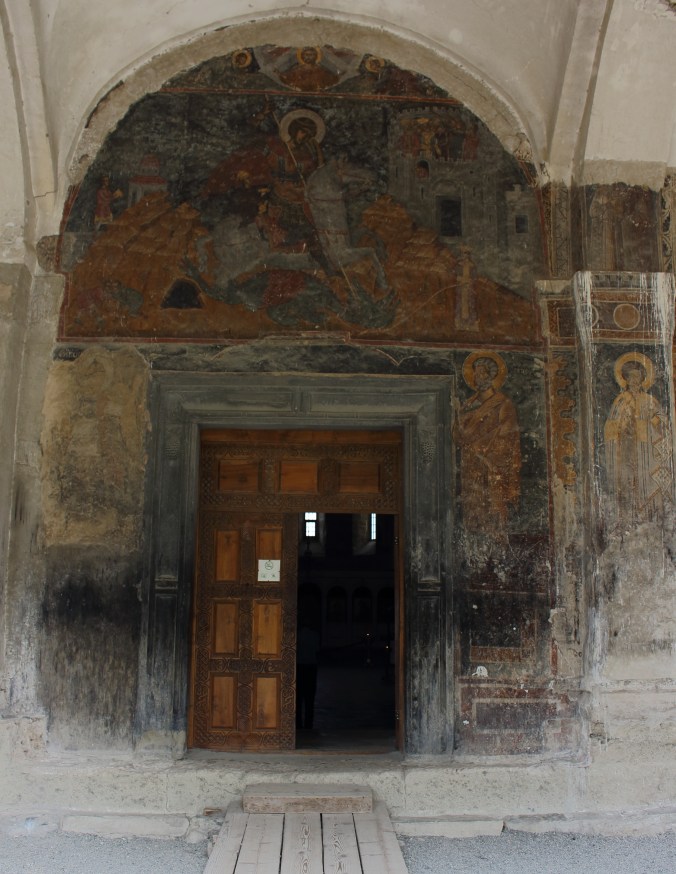
Some time later, we stopped at Alaverdi Monastery. The monastery was absolutely stunning and looked really old — indeed, as I subsequently learned, it dates back to 6th century, when it was founded by the Assyrian monk Joseph. It was made of stone and had high ceilings inside, and its walls, as well as the space above the entrance, were covered by stunning frescoes.

Entrance to Alaverdi Monastery

As we entered the monastery, huge stormy clouds gathered around; there was heaviness in the air and it was dark, which enhanced the mysteriousness and haunting beauty of Alaverdi.


One thing we were not too thrilled about was the fact that, although we were dressed conservatively, we were still made to wear a long brown gown (albeit we later learned that this was pretty much customary in the majority of Georgian monasteries). However, on leaving Alaverdi, we got the Georgian sweet churchkhela, which immediately cheered us up. Churchkhela is a funny looking sweet because it looks like a thin long sausage — but it’s essentially nuts threaded onto a string and dipped in grape juice, which is then dried. DELICIOUS. 😋
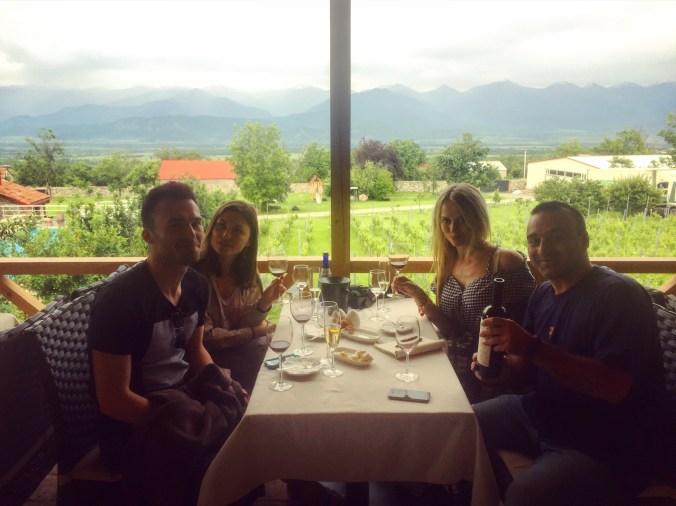
After this rather intense experience, we felt we needed something to lighten our spirits, so we headed straight to the Schuchmann winery for some wine tasting — after all, we were in the country which claims to be the cradle of wine civilisation, and in its main wine producing region at that!
IMG_7972

About to embark on some quality wine tasting.

This was another wonderful experience. We tried 7 wines, predominantly qvevri, a mix of reds, whites and sparkling, filtered and unfiltered, and each tasting was accompanied by the most knowledgeable explanation of the process and the business of the winery (it was interesting to find out, for instance, that Schuchmann’s main export market was China, followed by Germany —  and not Russia, as I thought).
IMG_1405

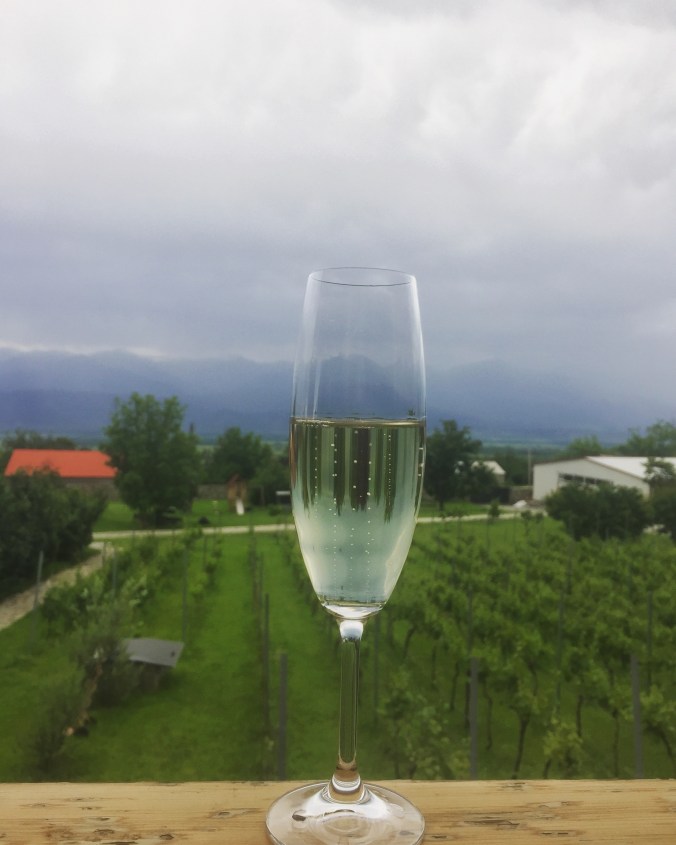
Wine No.2 — cheeky bubbles.

All of the wines were great, but I particularly liked Mukazani, a dry red, and ended up getting a bottle to take back home with me. As we drank our wines, our minds slowly and pleasantly getting fogged by their fumes, we were admiring the vast Alazani valley (c.250 km2!), which our terrace overlooked.
Schuchmann

The view

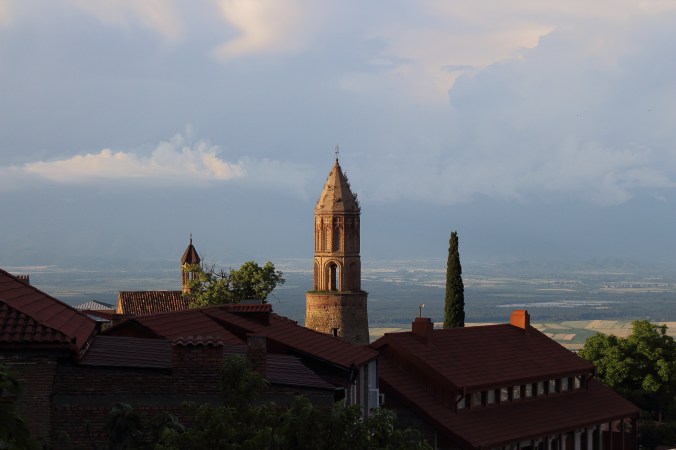
Happy and pleasantly intoxicated, we arrived in Sighnaghi, a pleasant little town overlooking the Alazani valley, in the late afternoon. We were staying in a hotel called Galavnis Kari for 2 nights. It was a very pleasant hotel, with really stunning views of green rolling hills.
IMG_1404

Galavnis Kari — not a bad view to wake up to!

On arrival, we were greeted by the hotel owner called — no, not Georgi this time! — Iosif, or Joseph, a nice and friendly man with piercing eyes, and his wife. Joseph immediately started telling us about his home wine production, and how we absolutely had to try his wine and chacha — which is Georgian (super strong) grape vodka, made from grape residue left after making wine. We dutifully promised that we would do so later.
We were looking forward to a beautiful culinary experience in the evening — we had a dinner reservation at Pheasant’s Tears (when I first heard the name of the restaurant I thought it was actually called “Peasant’s Tears”… “How grossly inappropriate!”, — I commented 😝), a restaurant and a winery famous for its qvevri wines — which it supplies to the Ottolenghi restaurants in London, amongst others — and fresh organic produce. But before we could indulge in this culinary delight, we had a little mission to complete…
Abe’s birthday was coming up, and Justina and I decided we wanted to get him something Georgian. “A traditional Georgian hat!” — we concluded, and without further ado, went hat-shopping around Sighnaghi.
Signaghi

Beautiful Sighnaghi

Signaghi 2

Sighnaghi, with Alazani Valley in the background

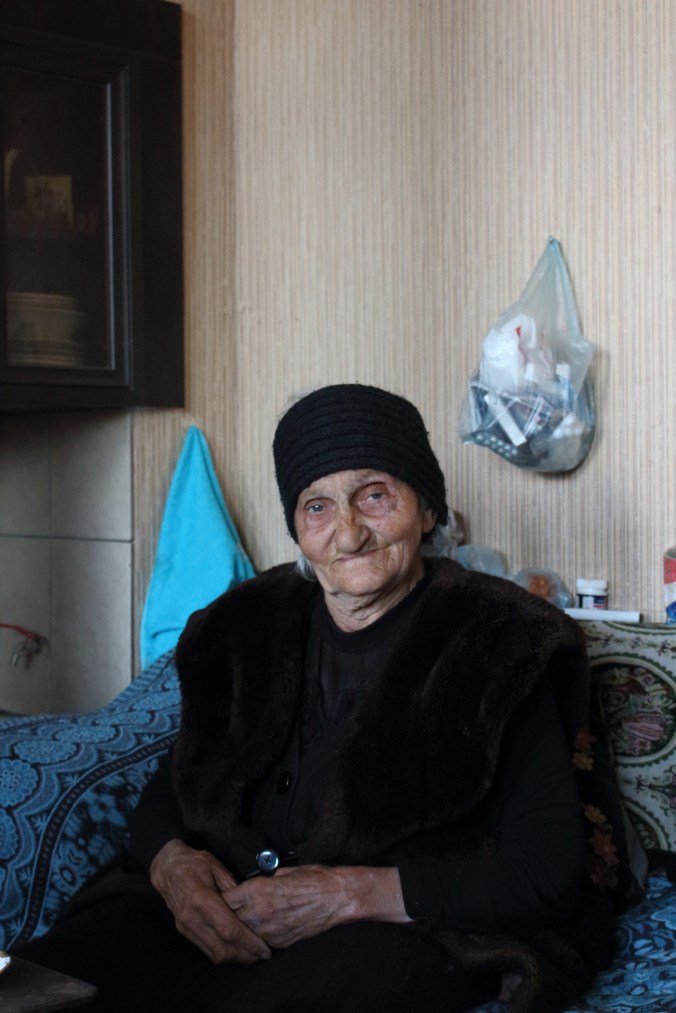
We agreed in advance that we would definitely haggle; after my Central Asian travel experience a few years earlier, I felt I was well-equipped with sophisticated haggling techniques. On one of the main streets, there were some houses with hats and other Georgian things being displayed outside. We stopped by one of those houses and started examining one of those big fluffy Georgian hats which took our fancy. We liked it and decided we would ask for a 10 lari discount. Then, all of a sudden, this old lady appeared out of the house. Her back was bent and she couldn’t stand straight. She had the most amazing blue eyes.
It was immediately clear to both of us that all our haggling plans went right out of the roof. The old lady invited us inside her house and showed us around; it was a traditional Georgian house with lots of icons. She couldn’t speak Russian, nor English, but she told us her name was Sira. We thanked her for her hospitality and bought the hat.
Sira

Sira

That evening in Pheasant’s Tears, we were treated to a wonderful meal — we had lamb, which was incredibly mild and tender, the most fragrant cucumber and tomato salad, and other Georgian delicacies. We also drank wine, lots of it. In the process, we got talking to one of the restaurant owners and his wife. We chatted about their friendship with Ottolenghi and the rising chef star Olia Hercules, who apparently came to Pheasant’s Tears in search for an inspiration for her new recipe book. The lady told us that she was a little disappointed that that people didn’t seem to get the traditional Georgian wine which, by her own admission, “takes a bit of self-education“. It is quite heavy, and it takes time and patience to learn how to appreciate it. She said that, unfortunately, people in Eastern Europe and Russia like “easy” Georgian wines, the likes of your traditional semi-sweet Khvanchkara and Kindzmarauli.  She said they went to Riga a few times to try to tell people about more exquisite Georgian wines, but it didn’t take off. She seemed quite sad about it. Once again, we saw how much Georgians loved their wine and what great pride they took in it.
IMG_1401

At Pheasant’s Tears

Over dinner, many toasts were raised, primarily by our Georgian friends. Georgian toasts are punchy, poetic, allegorical and philosophical all at once. This is perhaps best exemplified by the following toast about a “small, proud bird”  from the cult film “Kidnapping, Caucasian Style”, found here and translated as follows: “Once upon a time there lived a small, but very proud bird. She said,  ‘I will fly away alone right up to the Sun!’ The bird began to rise higher and higher but soon she burned her wings. Then she fell down to the bottom of the deepest canyon and died. So let’s drink for each of us to stay together as a team!” (source: http://russiapedia.rt.com/of-russian-origin/tamada/)
Gigi raised a toast “to Georgia, a small country with big aspirations” (which for some reason reminded me of the “small, proud bird” toast) and, to finish off the evening — a toast “to beautiful girls — like you“. That toast we liked very much. ☺️
We returned to our hotel tired and happy. Joseph was waiting for us at the entrance. He was very insistent that we should come with him and try his home made wine. We declined, and Joseph was seemingly upset. We felt sorry for Joseph but there was no way we could drink more wine that night.
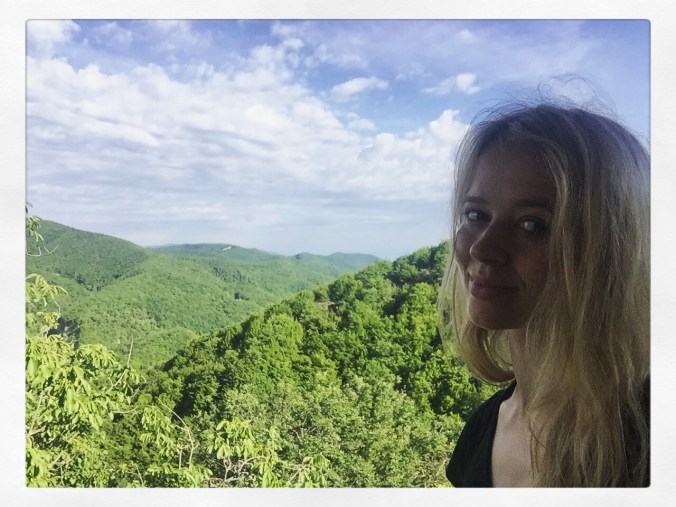
The next day was the hiking day. At the trip planning stage, we were all keen to incorporate a bit of hiking into our Georgian adventure, and were wavering between Vashlovani and Lagodekhi Protected Areas — albeit very different, both looked spectacular. We eventually decided against Vashlovani, however, due to the likely presence of vipers 🐍 (see Part II!). You can do a long hike in Lagodekhi to Shavi Kldeebis Tba a.k.a. Black Rocks Lake, which looks spectacular, but we didn’t have 3 days to spare, and instead opted for a shorter half-day hike to two waterfalls. Gigi was going to wait for us at the entrance. We met Gia (which is yet another variation of the name Georgi!!), one of the local guides, at the visitor centre, who explained that we needed to follow yellow signs to the waterfalls. Sounded easy enough! My Lonely Planet guide also informed me that Lagodekhi was “home to several hundred East Caucasian tur, deer and chamois“. As we were to find out just a little later, Lonely Planet failed to mention one very big fury animal. 🙀
IMG_1393

Lagodekhi — start of the hike.

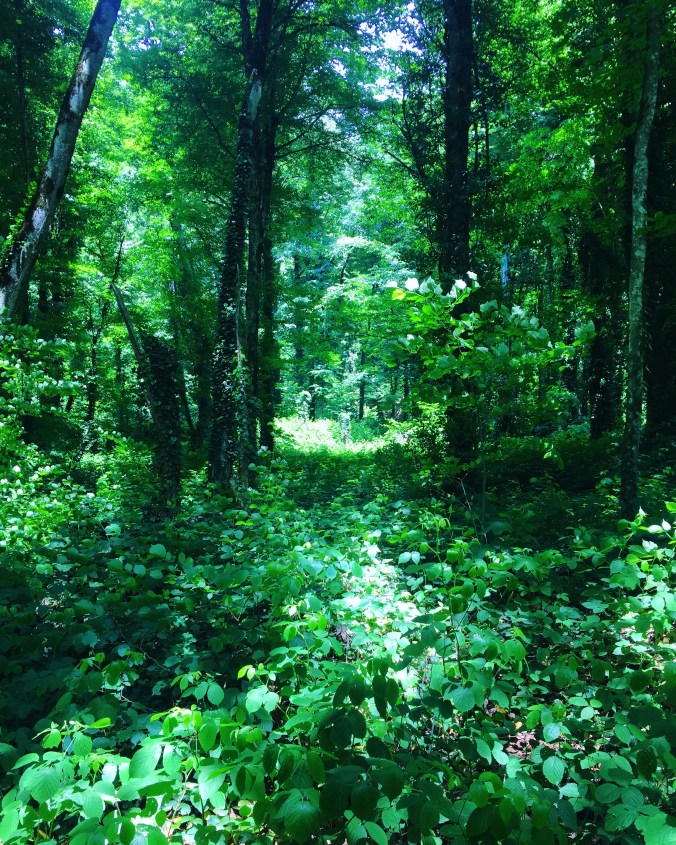
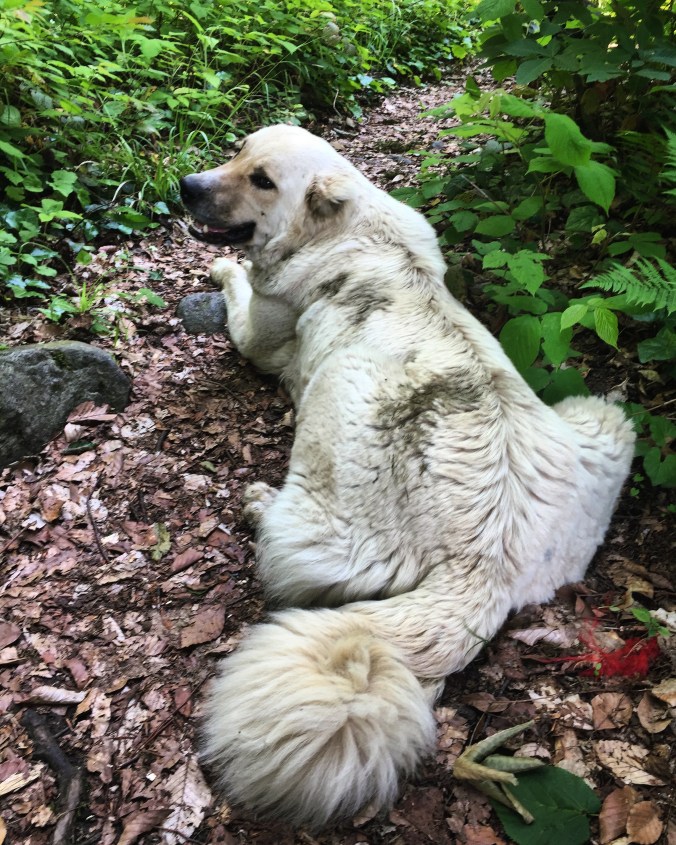
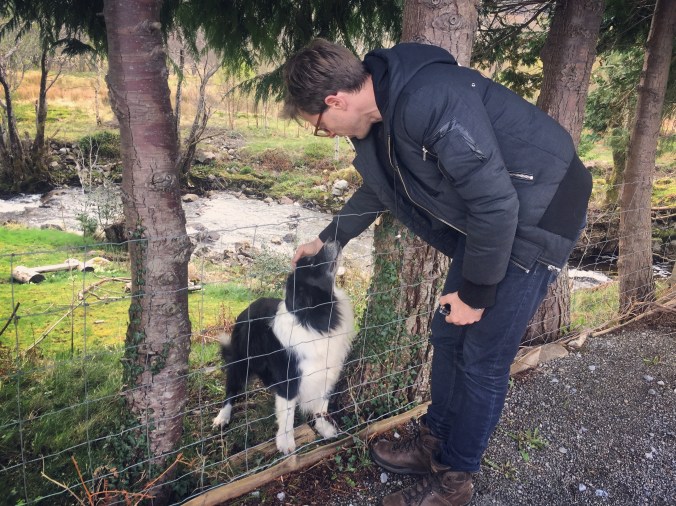
As we progressed down the path thorough the green forest, a cute little mongrel started following us; a big white dog, which looked more like a bear than a dog, also followed us for part of the way. There were very few tourists around, which was excellent.
IMG_1400

One of our furry friends

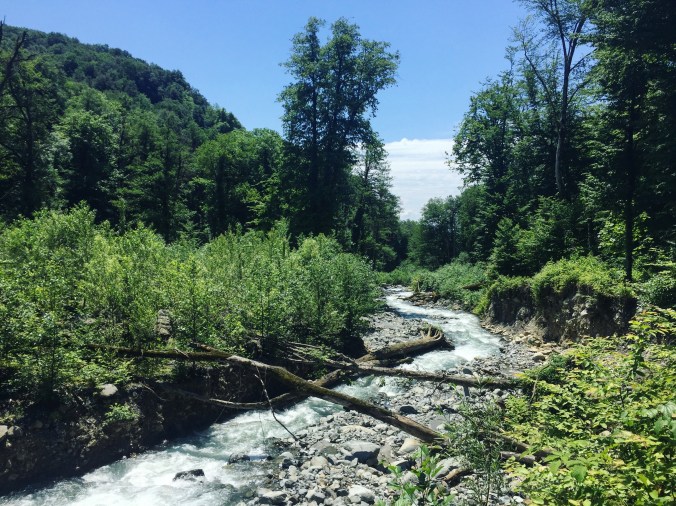
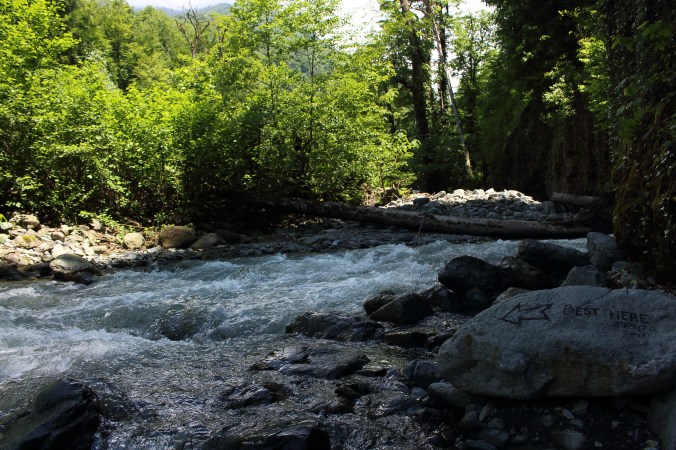
After some time, we got to a small river, quite narrow and shallow but very fast and freezing cold, which we needed to cross.
IMG_1399

The river

No bridge or other crossing facility was in sight.
Lagodekhi

No bridge in sight — but thanks for the “best here” tip!

So we took our boots off and crossed the river barefoot, sharp stones on the river bottom cutting into our feet. Once on the other side of the river, I heard a plaintive cry. It was the mongrel, left behind on the other side. I couldn’t bear it. Despite my friend’s protestations, I crossed the river again, picked up the whining dog and carried it across.


The path kept climbing up higher now, and the river was down below. It was still very foresty and quite steep. And then, out of nowhere and entirely unexpectedly, three bears appeared: one mamma bear and two cubs, some 10-15 metres away from us! 🐻🐻🐻Before we could react, they ran up the mountain and disappeared out of sight. It was the first time we saw bears in the wild and we didn’t know what to do and whether it was safe for us to continue. We thought that perhaps the mamma bear would feel that we are threatening the cubs and attack us. So there we stood, glued to one spot, not knowing whether to proceed or to turn back. I called Gia to explain the predicament — he was confident it was safe for us to proceed. So we eventually did, and reached the waterfalls with no further emergencies some 10 minutes later. It was a great spot for a leisurely lunch.
We then returned to the starting point the same way, repeating the whole “carry-the-dog-across-the-river” business again. 🐶
After another over the top dinner, this time in Nikala in Sighnaghi (where Gigi ordered 15 khinkali, in addition to everything else we had; in response to our protestations, he said this was nothing: the custom number of khinkali for a Georgian party is 300), we succumbed to Joseph’s invitation to try his home made wine.
IMG_1397

Gigi’s khinkali

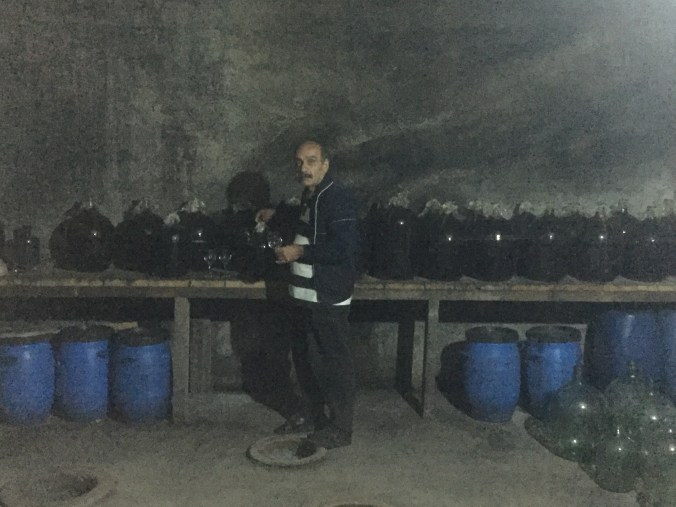
We were terribly tired and already had quite a bit to drink at Nikala, but we just couldn’t say “no” to this man’s hospitality again. So he took us down to his cellar, where he showed us his wine barrels and his chacha machine.
IMG_8064

Joseph and his wine

We drank Joseph’s home-made wine, and many toasts followed in succession, including “to friendship” and “to love” — on the subject of which, Gigi and Joseph told us that Sighnaghi was “a city of love”.
“Why?” — we asked.
“Because the registry office here is open 24/7!” — they replied.
Tired, drunk and happy, we went to bed. ☺️

A Georgian Journal (Part II: David Gareji monastery, and a bit more of Tbilisi)

Day 3 of our Georgian adventure was dedicated to visiting a monastery.  If I had to pick 3 simple words that encapsulate the essence of Georgia, I think it would be: monasteries, wine and food; indeed, from what we saw during our trip, the very many Georgian churches and monasteries are some of the oldest and best preserved I have seen anywhere. I think the fact that Georgia was spared Nazi invasion during WWII must have played a part.

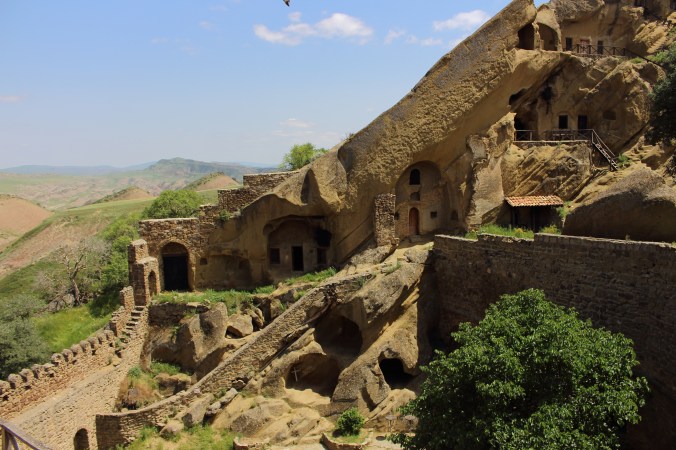
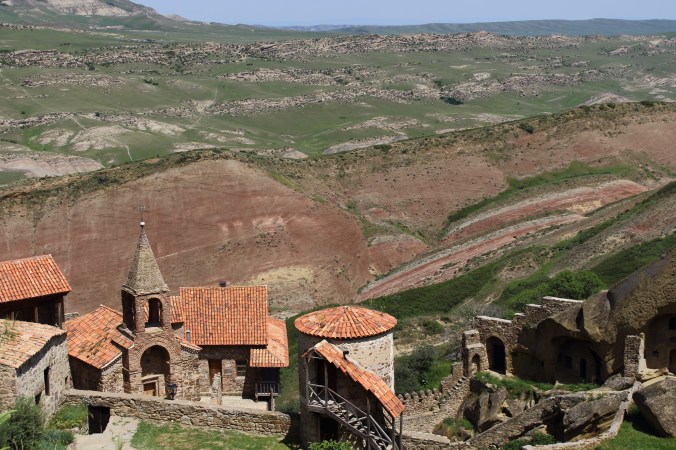
The monastery we visited was that of David Gareji, which is more accurately described as a ‘monastery complex’ as it comprises 15 monasteries spread over a large area right on the border with Azerbaijan, in the Georgian region of Kakheti.  Of the 15 monasteries, visitors typically see two: Lavra and Udabno.  For history geeks like me, Lavra was the original monastery, which was founded by David Gareji, one of the 13 Syrian fathers who returned to Georgia from the Middle East to spread Christianity in the country in the 6th century. The complex gradually expanded, but in 1265, it was destroyed by the Mongols, then revived by George V the Brilliant (what a name! George V the Brilliant was King of Georgia who recovered Georgia from a century-old Mongol domination), then destroyed again in 1615, when the soldiers of Shah Abbas of Persia killed 6,000 monks.

A trip there took us around three hours from Tbilisi (if you are considering visiting David Gareji from Tbilisi, look no further than Gareji Line — a well-organised and comfortable minibus will take you there and back for a very reasonable price).

On the way to DG

On the way to David Gareji, picture-perfect Georgian plains 😍

During the Soviet days, the monastery was used for military exercises; however, since then, Lavra has been restored and is now inhabited by monks (although we only saw a couple when we were there).

David Gareja

Lavra

David Gareja 2

Lavra 2

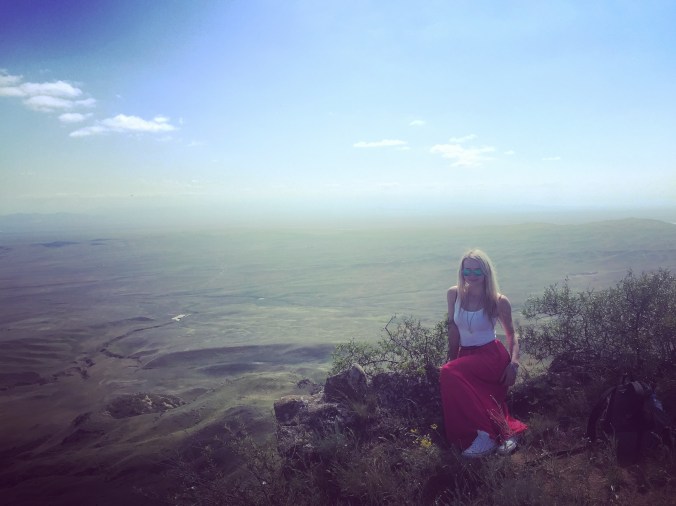
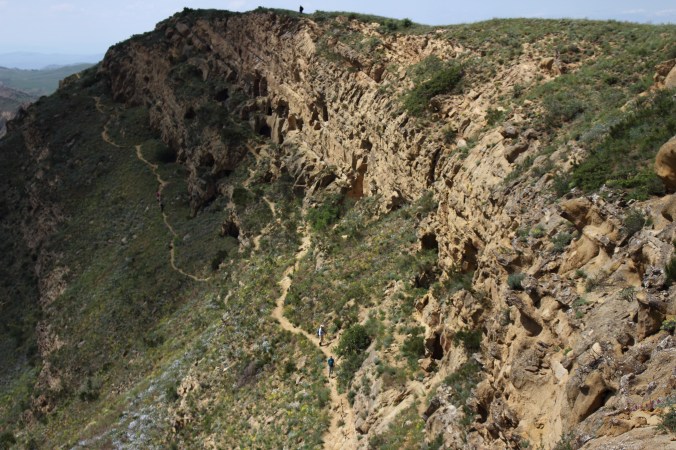
Lavra is nice, but what I was most impressed with was Udabno. Udabno was quite a hike away from Lavra — had I known, I would have worn something more hike-y than a long skirt and a pair of white Converse!

IMG_7799

Hiking attire fails 💁

Udadbo comprises a number of caves along a steep escarpment facing Azerbaijan.

David Gareja caves

Udabno caves

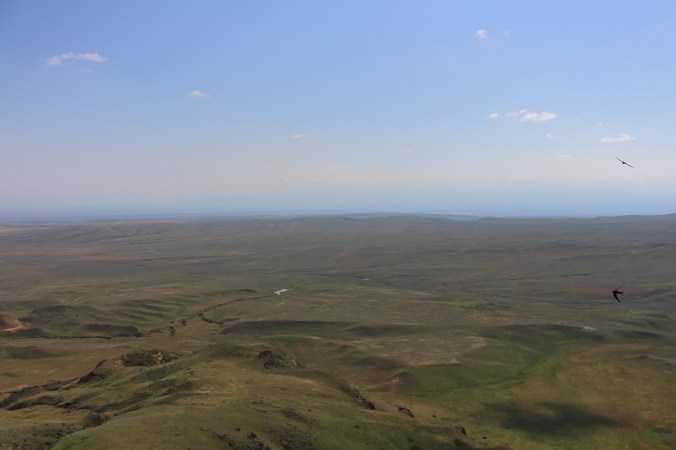
David Gareja overlooking Azerbaijan

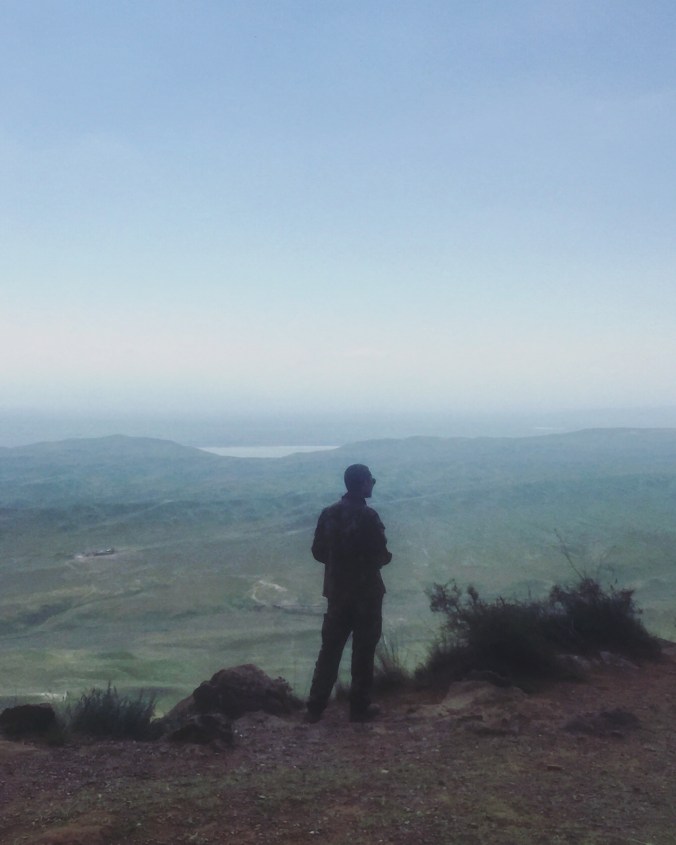
View from Udadno, Azerbaijan. Birds flying high…

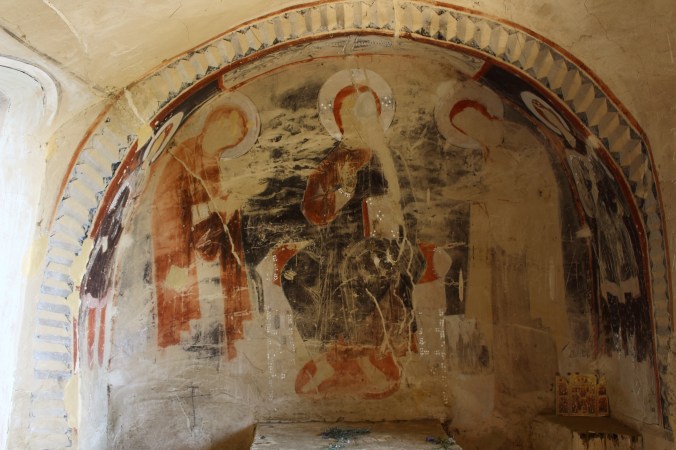
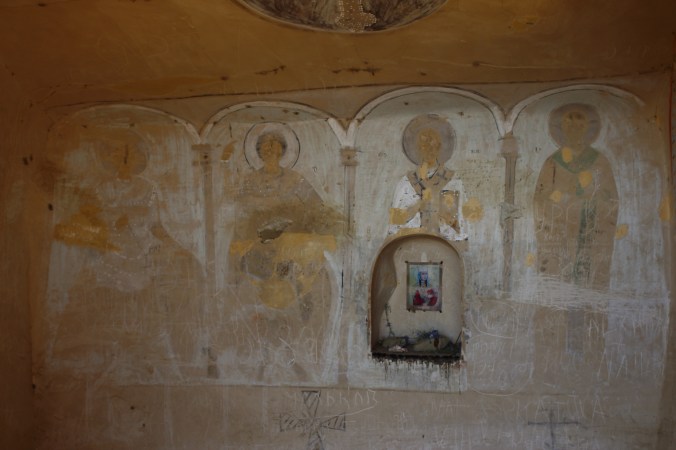
Inside the caves, one finds beautiful frescoes — which are even more impressive if you take into account the fact that they were painted in the 10-13 centuries.

Caves 3

Udabno frescoes

Caves 2

Udabno frescoes 2

Given that these frescoes are so old and so historically significant, I found it remarkable that that visitors were free to wonder around, there were no ‘cave attendants’, and that the entry to the monastery was completely free.

Atop the mountain on the side of which the Udabno caves were sat 2 Georgian soldiers with riffles. They were friendly but politely declined our request to take photos with them; however, I succeeded in sneakily taking a snap of one of them against the background of the green plains of Azerbaijan.

image2 (1)

Georgian soldier, David Gareji

The Azerbaijan-Georgia border line has not yet been finally demarcated here, and apparently border tensions occasionally flare up. But, whilst we were there, “[a]ll [was] Quiet on the Western Front“.

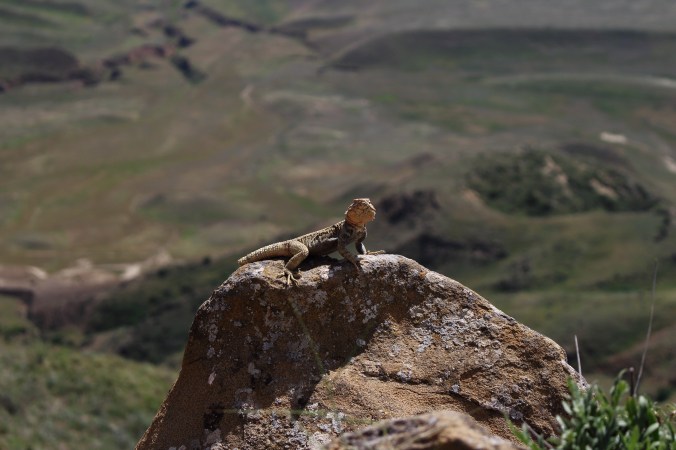
One of the main concerns we (read: Abe) had on the way to David Gareji was VIPERS. (This was not entirely unsubstantiated, given that, at the trip planning stage, we were advised against going to the Vashlovani national park by a Georgian on the basis that there was a high likelihood that we would be exposed to a viper attack 🐍! Apparently, May / June is a mating season for snakes and they become quite aggressive. Speaking of snakes, there is a particular type of vipers present in Georgia: Macrovipera lebetina (commonly known as ‘blunt-nosed viper’ and ‘Levantine viper’) — now, these guys must be truly terrifying, with female reaching 150cm in length!) In the event, however, no vipers presented themselves. The only reptiles we saw were a few geckos — including this one —

Little ghekko

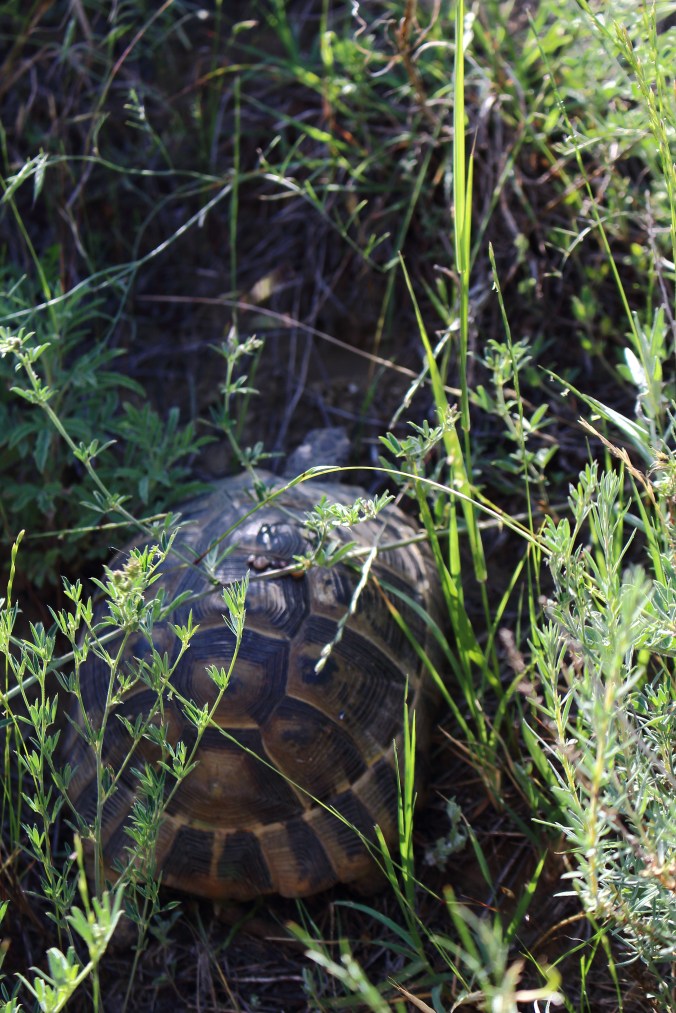
— and, as we were leaving David Gareji, this cute little tortoise lurking in the grass:

Turtle

We returned to our Tbilisi base around 8pm, having spent just over 3 hours in the monastery.

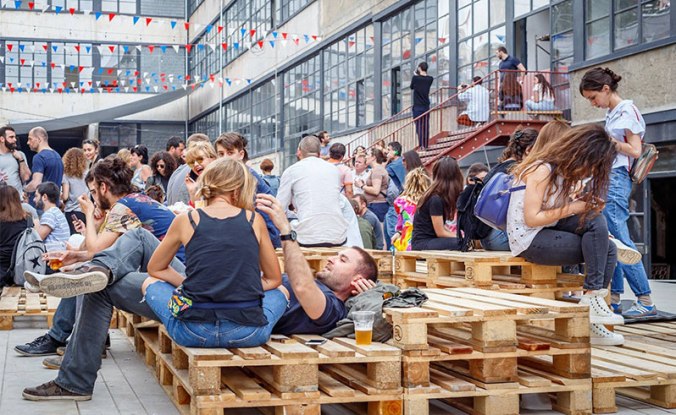
Abe left us to forge ties with the local music community, and Justina and I made our way to Fabrika. Fabrika is certainly worth a visit if you find yourself in Tbilisi and fancy a bit of a cool vibe — it comprises several bars and concept stores, and has a backyard where young Georgians hang out. It would not look out of place in Berlin, East London or Copenhagen (Fabrika is also a hostel — if you need a roof over your head in Tbilisi!). As the name suggests, Fabrika used to be a factory — a sewing factory, to be precise, and apparently vintage clothes that were once produced by Fabrika can still be bought here under the label ‘Nino’.

As we were sipping our Georgian wine, we got talking to Goglik. I think — in fact, I’m 99% sure — that ‘Goglik’ is a variation of ‘Georgi’, and Georgi — unsurprisingly, perhaps, given that it’s Georgia we are talking about! — must be the most popular name in the country. We met many Georgis during our time in Georgia; most of them used a different variation of the name, probably to make life a bit less confusing for everyone. But the most wonderful Georgi we met was Gigi, our driver and tour guide around the Kakheti region, who also became our friend in the process. But I digress — this Georgi, Goglik, told us that he was a sound producer. He told us that he did music for one of the scenes in the film “Ben-Hur”, and he was very upset because his name did not appear in the film titles. This did not seem very fair to us 😠.

Having chatted to Goglik for a bit about his misfortunes, we headed back to our flat. In Part I, I wrote about neighbours sitting outside under an awning, drinking home made wine and playing Russian draughts; when we returned home some time after 11pm that night, that was still very much the picture. We greeted our neighbours as we passed by, and the man who delivered red wine to us on our first day asked us when we were leaving.

“Tomorrow,” — we said.

“I will give you some home-made white wine for the road,” — he said, and added: “razum poteryaete” (which literally means: “you will lose your mind“).

We politely declined. We still had 1/2 litre of the red wine he previously gave us, and did not want any wine to go to waste as we would most certainly have neither the time nor the stamina to drink it before tomorrow, when we had to depart for Kakheti. He appeared to accept it but, some 5 minutes after we got back to our flat, the door bell rang.

“Who is that?” — I asked, with slight trepidation.

“Mamuk,” — a deep voice responded.

I opened the door, and there he was, our lovely neighbour Mamuk, smiling, arms stretched out with two bottles of white wine.

“This is very kind of you,” — I said, — “I don’t know how to thank you”.

“No need to thank me,” — Mamuk replied, — “Just come to Georgia again”.

Have I said already that the Georgians are one of the kindest and most hospitable people I have ever met..? 💙

IMG_7812

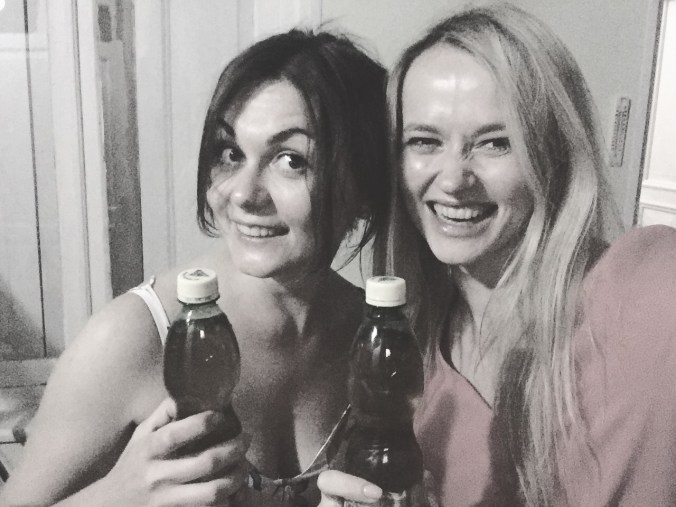
With Mamuk’s home-made wine

The next morning, we left for Kakheti, the famous wine region of Georgia.

A Georgian Journal (Part I: First Encounter with Georgia: Tbilisi)

Wherever we had been in Russia, in Moscow, in the Ukraine, in Stalingrad, the magical name of Georgia came up constantly. People who had never been there, and who possibly never could go there, spoke of Georgia with a kind of longing and a great admiration. […] [T]hey spoke of the country in the Caucasus and around the Black Sea as a kind of second heaven. Indeed, we began to believe that most Russians hope that if they live very good and virtuous lives, they will go not to heaven, but to Georgia, when they die. It is a country favored in climate, very rich in soil, and it has its own little ocean.

John Steinbeck, “A Russian Journal”, 1948

Dreams come true and thoughts materialise, more often than you think, provided that your thought process is at the right wavelength, so to speak. 😊 Georgia had been on my mind for a long long time — I grew up reading great Russian poets whose works were inspired by Georgia, studying the Patriotic War of 1812 and the pivotal role Prince Bagration played in Russia’s resistance against Napoleon, watching great Soviet films about Georgia (I’m thinking, in particular, about Mimino — full version with English subtitles is available on youtube, if you fancy some quality entertainment) and drinking Borjomi. Georgia to me — like, I think, to many people of the Soviet and post-Soviet generation — had always been surrounded by an air of mystery and romanticism, which is a very alluring combination indeed.

And so when my friend Justina told me a few months ago that she had been planning a trip to Georgia with a few of her friends, I shamelessly invited myself to join them. They kindly admitted me to Team Georgia and, fast forward to the end of May, I was excitingly packing my backpack in anticipation of a 9 day long adventure in this beautiful country in the heart of Caucasus.

IMG_7420

So good to feel the weight of the backpack again!

Adventures (read: the author embarrassing herself) began on the way to the airport already. Justina and I were excitedly chatting away in anticipation of the trip. I started telling her, rather loudly and animatedly, about the advice my grandma gave me before we set off. She warned me, with real concern in her voice, that a girl ought to be careful with Georgian men because they are such “sweet talkers“. I then told Justina about John Steinbeck’s description of Georgians in his book “A Russian Journal” (see also the above quotation; now is also the time to admit that I drew inspiration from the title of his book for this blog post 😜): “They spoke of Georgians as supermen, as great drinkers, great dancers, great musicians, great workers and lovers“. Two young guys, who were sitting right in front of us, then turned around. It transpired that they were Georgian and looked evidently pleased. They engaged us in a conversation, asking, amongst other things, how my grandmother acquired this knowledge. I like to think of myself as a confident and independent woman, but invariably I blush like a schoolgirl every time I find myself in situations such as this one. 🙈

Our flight was with Georgian Airways, departing at 22:50. We got to the airport quite early to avoid any unnecessary “oh-my-gosh-we-are-going-to-miss-our-flight” stress, but we needn’t have worried — Gatwick resembled a bit of a ghost town and we cleared security with plenty of time to spare, which we used to indulgently sip champagne in Jamie’s Italian. Direct London-Tbilisi flight with Georgian Airways was only introduced relatively recently, and it’s great: you leave London quite late, sleep on the plane (a sleeping pill and red wine is a powerful combination) and, some 5 hours later, your are in Tbilisi (+3 GMT), ready to start the day.

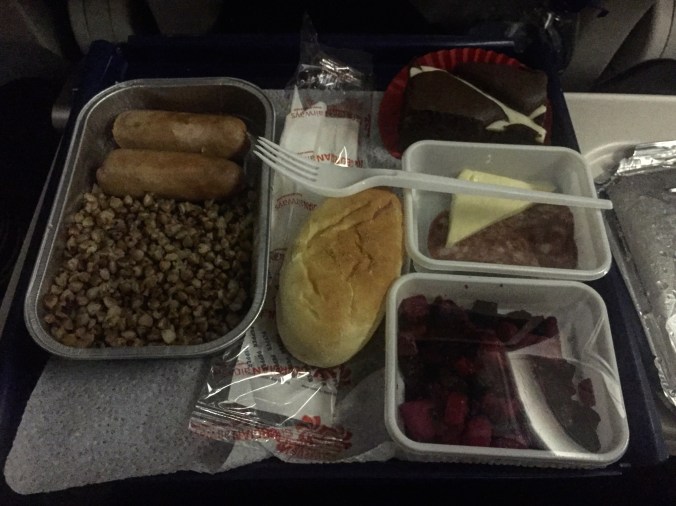
When we took off, Justina volunteered to be on food duty. I put my sleeping mask on, relying on her to wake me up when the food arrived, but she failed miserably at this task, having fallen asleep while on duty. I woke up around 1am, with the smell of sausages tickling my nostrils, just in time for our early morning dinner. The food was crazy — buckwheat, sausages and beetroot salad, accompanied by some bread, a chunk of butter and slices of good old kolbasa (Soviet style salami).
IMG_8524

Georgian Airways flight food — yum!

It didn’t look all that appealing and it took me all the way back to my childhood days in the mid-1990s — but, to out great surprise, it was actually delicious. We gobbled our early morning meal and went back to sleep, satisfied.

Our plane landed in Tbilisi at 6:30am local time. The owner of the AirBNB flat where we we staying arranged for someone to pick us up from the airport and take us to our home for the next 3 nights. After some confusion, we found our driver, Alfred, an absolutely delightful man, probably in his early 60s. As we drove to the place, Alfred told us the history of and various fascinating random facts about Tbilisi. He told us that many people, especially the young, have left, mostly to work in Moscow (according to this World Bank data, personal remittances as a % of GDP are pretty high, at 10.4% — though this is nothing compared to Tajikistan; when I visited the country in 2014, I was shocked to find out that remittances account for c. 1/4 of the country’s GDP).

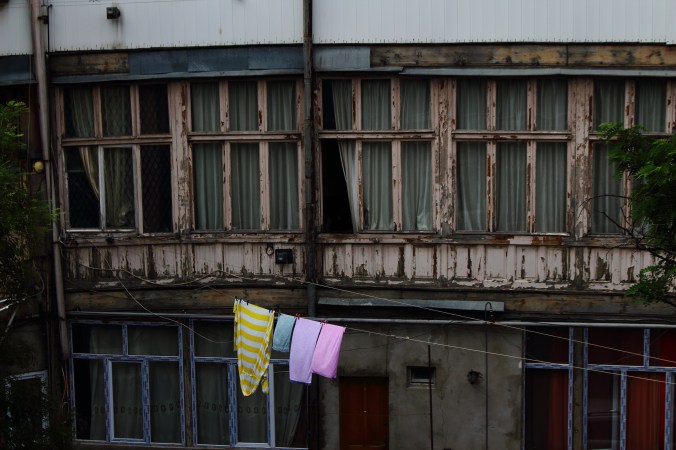
After half an hour or so, we arrived at the property, and I was instantly in love. It was one of those old, slightly dishevelled houses, with lots of flats and a circular ‘Italian yard’, with neighbours sitting outside under an awning, drinking home made wine and playing Russian draughts, and children playing and running around. In short, the house was full of character and exuded a warm welcome.
Tbilisi flat

Our home for the first few nights in Tbilisi.

Alfred showed us into out flat, and it also didn’t disappoint — it was incredibly spacious and even had a piano in one of the bedrooms. The only slightly disconcerting thing was the artwork, which included a picture of a clown hung right above one of the beds. Justina and I quickly decided that we were going to allocate the clown bedroom to Abe, who was due to arrive the next day.

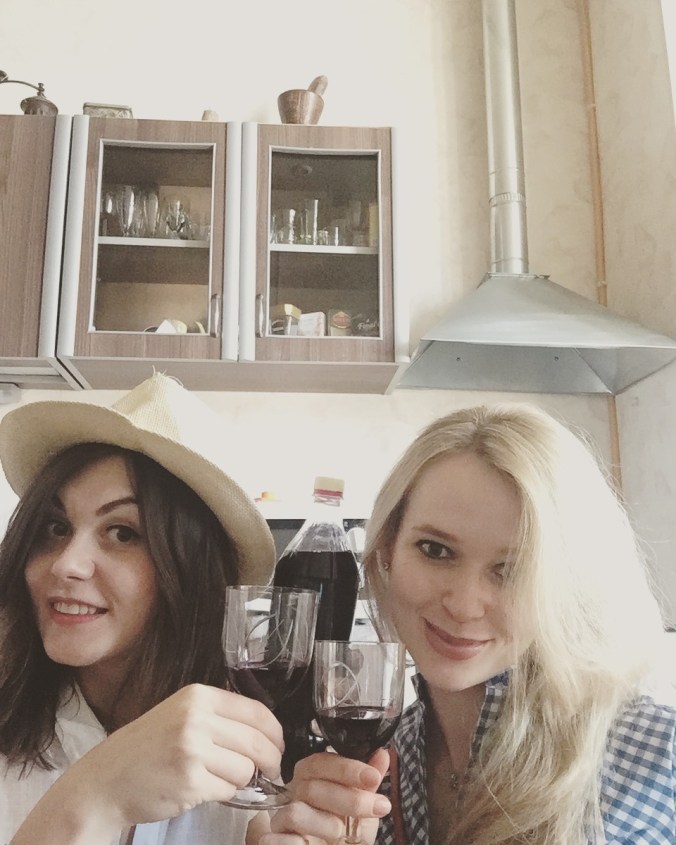
After a little power nap, we began to get ready to explore the city. Suddenly, our door bell rang. Slightly perplexed — we were not expecting anyone — I opened the door. A man stood there, holding a plastic bottle of something red. “I’m your neighbour — here’s some homemade wine especially for you,” — he said in Russian, handed over the bottle of wine to me and left before I could even say thank you. Virtually everyone had heard about Georgian hospitality, and we were quite moved to experience it within an hour of checking into our flat.
IMG_7544

Only in Georgia.

Having savoured the wine, we made our way into the old town. On the way, we stopped at a little kiosk recommended by Alfred for some great khachapuri. There will be more on Georgian cuisine later but for now, I should explain that khachapuri is one of the most iconic Georgian dishes. It’s very simple — it is, essentially, bread with cheese, which comes in many shapes and flavours. It is everywhere in Georgia — I read somewhere that it is a Georgian equivalent of fast food. Khachapuri are absolutely divine.   During our Georgian trip, we consumed so many that I literally lost count.   Anyway, as we were about to pay at the kiosk, a Georgian man appeared out of nowhere and insisted on paying for our khachapuri; he told us it was his “treat”. We protested but the kiosk lady refused to accept money from us outright, so eventually we had to give in to this further manifestation of Georgian hospitality.

Aside from Georgian hospitality, we soon discovered that another stereotype about Georgians was also not unsubstantiated — and it was, ironically, what my grandmother “warned” me about. During out first day in Tbilisi, as well as during our second day before Abe joined us, it would be fair to say that we were approached by many Georgian men. They were all, just as my grandmother said, ‘sweet talkers’: funny and charming and interesting (one guy, for instance, was very interested in discussing the subject of my camera’s aperture with me). They were also respectful and took a polite no for an answer.  (Aside from Otta, the guy who we met just before Abe joined us. Otta told us he was a producer of music videos and, whilst he ticked other boxes (he spoke about Kafka, religion, his passion for motorcycles and his approach to living life, which he described as “akin to walking on the blade of a knife”), he did not like our ‘no’, and kept insisting, for a long time and rather bizarrely, that we should join him for a carbonara. 😬 He kept saying that life is about sharing and that he wanted to share a conversation and some carbonara with such beautiful girls.)

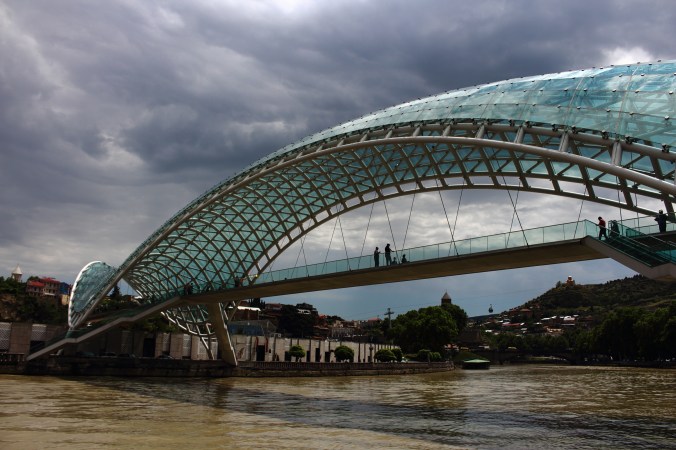
We walked to the Old Town via the Peace Bridge over the Mtkvari river. The Peace Bridge is a Saakashvili era creation; it was designed by an Italian architect Michele De Lucchi and opened in 2010.
Peace bridge

Peace Bridge

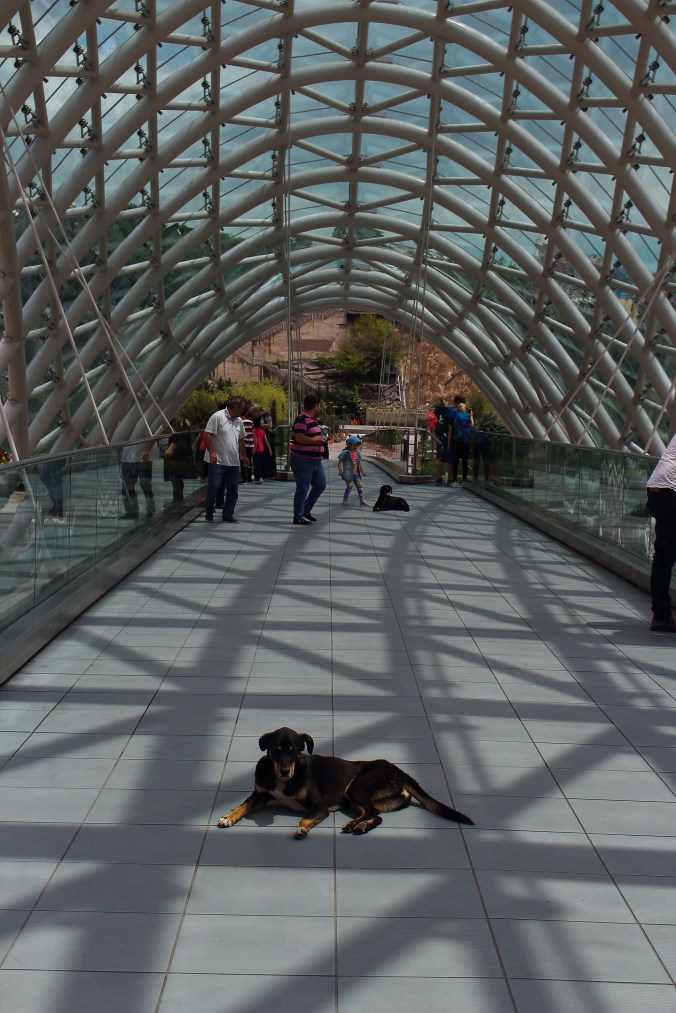
Apparently, it’s very divisive — people either love it or hate it, but we actually quite liked it. It is an elegant structure, which gives the impression almost as if it was suspended in the air.
Dog on Peace Bridge

Peace Bridge inside

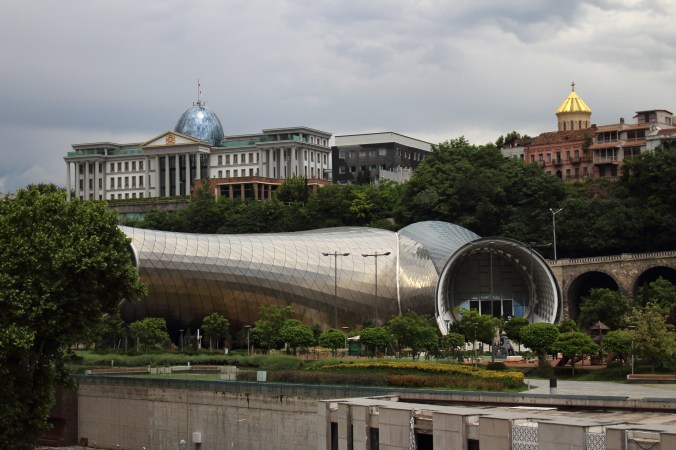
From speaking with Georgian people, my feeling was that they dislike Mikhail Saakashvili, Georgia’s former president, immensely, and they also dislike things that are associated with him as a result. The Piece Bridge is one of such things; another one is this Music Theatre and Exhibition Hall in Rhike Park, which looks like two massive tubes.
Saakashvili structure

Music Theatre and Exhibition Hall, Rhike Park

We went to Matekhi Church, a beautiful church sitting on a rocky outcrop above Mtkvari. The church was built between 1278 and 1289; it felt very intimate and private inside, and it also struck me that icons look quite different to those I had seen in Russian Orthodox churches — somehow, they looked older and more ‘primitive’.

After that, we wondered around the old town; we stumbled across a big gathering of people enjoying a concert —
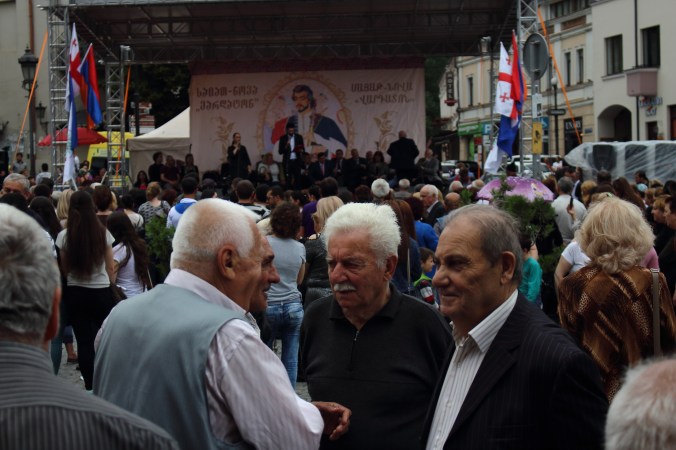
Men talking .JPG

— and went to the Armenian Cathedral of St George, a pretty 13th-century Armenian church in the old town. Here, the atmosphere was very different compared to Matekhi: people were talking, laughing and taking pictures.
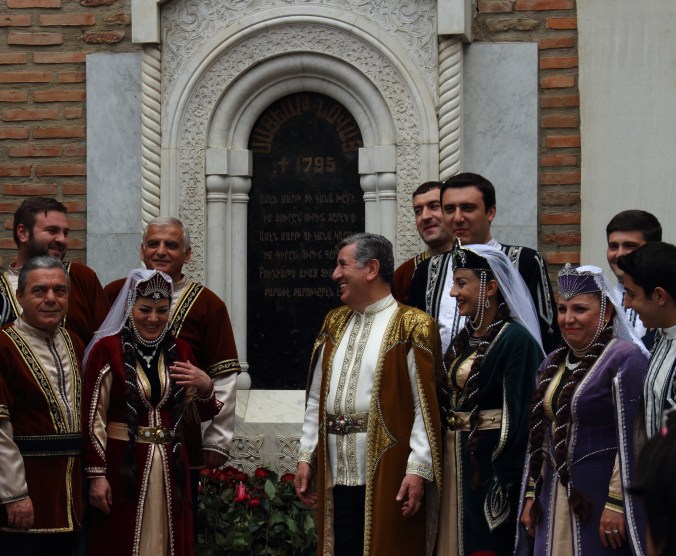
Armenians in Tbilisi

Outside the Armenian Cathedral of St George.

We had lunch in a cheap and cheerful place called Samikitno on Freedom Square. It was exactly what the doctor ordered — we particularly enjoyed aubergine with walnuts and the aubergine salad and — of course! — khinkali. Khinkali are, essentially, big dumplings, and they come with all sorts of fillings: lamb, beef, cheese, mushrooms, cottage cheese… They are succulent and totally delicious! 😍 The one thing on the menu I did not especially liked, however, was gomi, which is made from coarse cornmeal and topped with strips of Sulguni cheese and butter; it was just a tad too bland, and even the Sulguni cheese didn’t help.
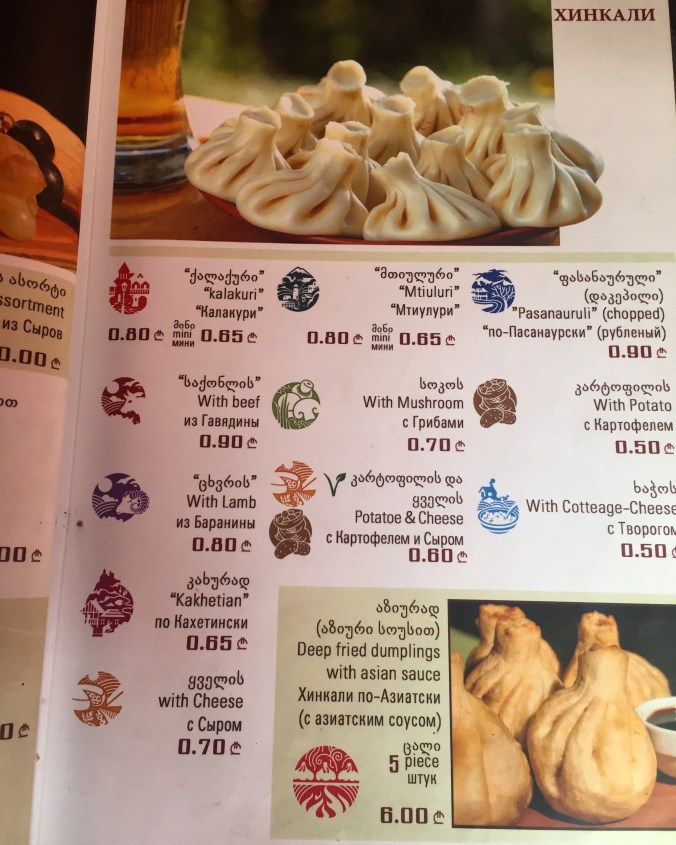
IMG_8530

Khinkali at Samikitno

In the evening, we went to the opera. The Opera & Ballet Theatre (officially, the Georgian National Opera and Ballet Theater of Tbilisi — formerly known as the Tiflis Imperial Theater) is unusual and impressive. It is a neo-Moorish building with colourful tiles and stained-glass windows inside, which reopened in early 2016.
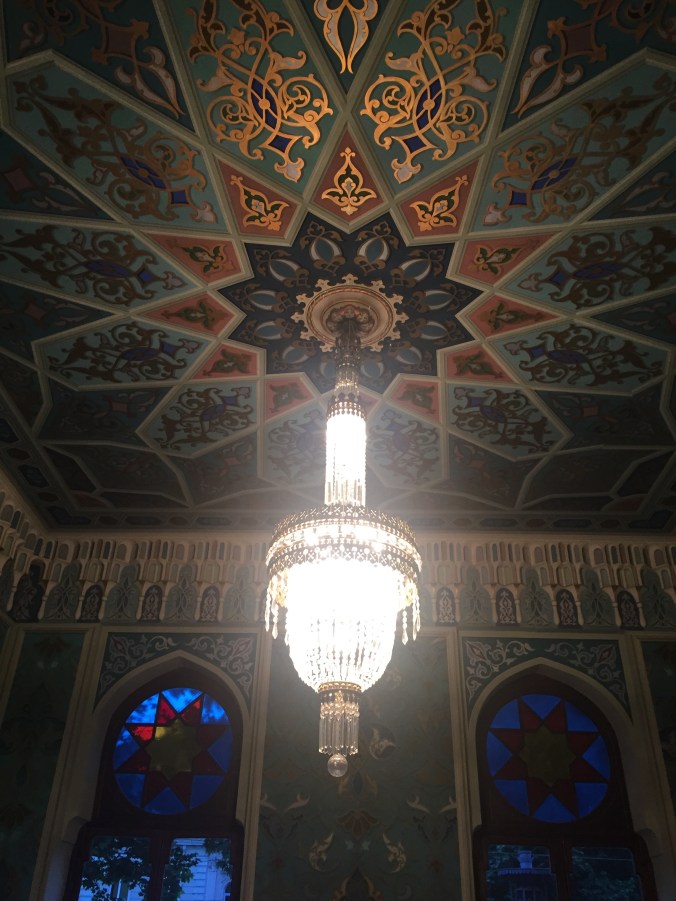
IMG_7592

Inside the Opera & Ballet Theatre

We saw L’elisir d’amore (The Elixir of Love), and it was a premiere. The opera was in Italian with Georgian subtitles, and it didn’t particularly help that we didn’t know the plot and were incredibly tired after all of the travelling the previous night. So we started to doze off… It is a very particular feeling when you wake up just as you head is about to land on the shoulder of the person sitting next to you, very embarrassed at your apparent lack of cultural sophistication and hoping that no one has noticed your faux pas. However, we were a lot more awake during Part 2, and got the general gist of the story: the set up was circus (it was all quick-paced and colourful), and the main heroine was choosing between two contenders for her heart, and eventually chose one.
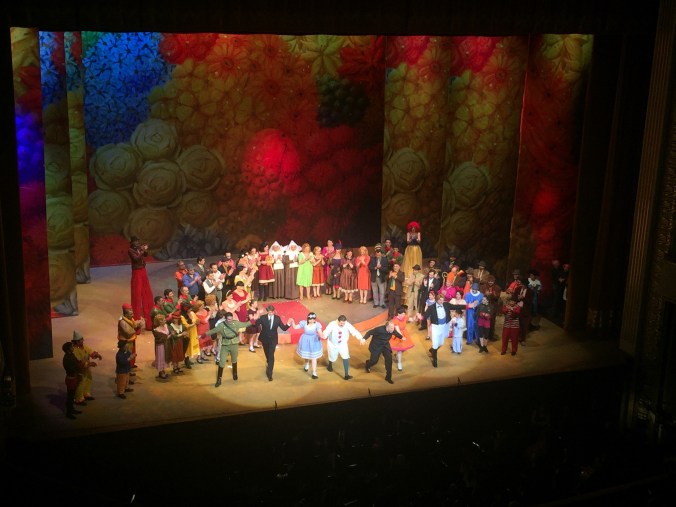
IMG_7598

L’elisir d’amore — I think we eventually got the gist of it, even though we speak neither Italian nor Georgian.

I noticed that there were more women than men, and also that women were immaculately dressed; I certainly felt underdressed in my out-of-the-backpack little dress and flats in comparison!
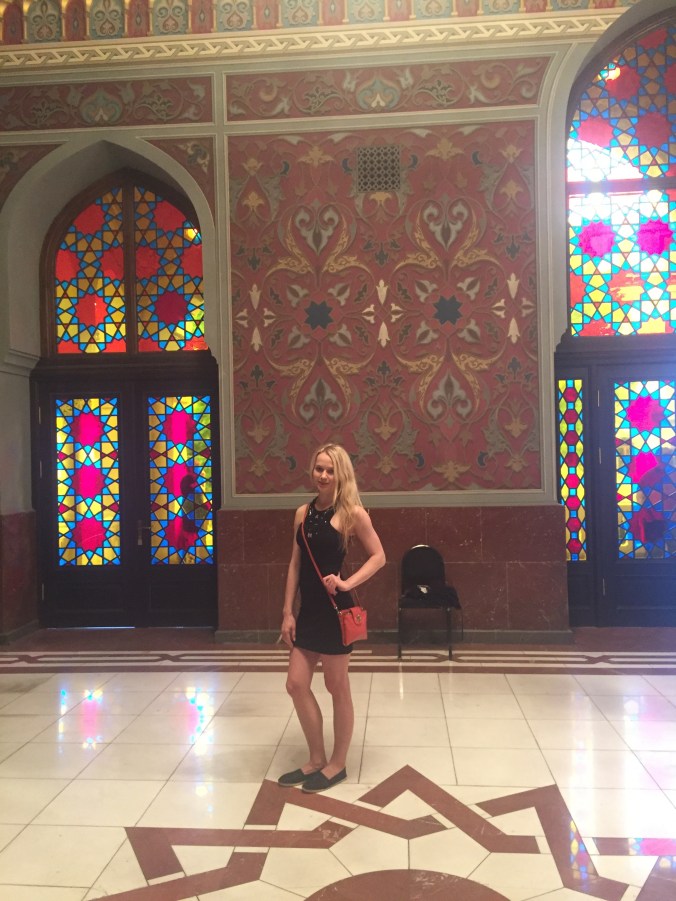
IMG_7558

The Opera & Ballet Theatre. Underdressed!

And this is a general tendency among theatre goers in Eastern Europe and the former USSR countries, which just isn’t the case in the UK (with some notable exceptions, like the Royal Opera House). I think it’s nice to dress up when you attend a cultural event and I miss this aspect of social life in the UK. 😏

During day 2 in Tbilisi, after our little ‘carbonara confrontation’ with Otta and after Abe finally joined us (😃), we continued our Tbilisi exploration. As all of three of us are great lovers of food (and, in the case of Justina and me, wine), we decided to savour more delicious Georgian food. So we made our way to a fantastic restaurant called Barbarestan, where we had a little Georgian feast.
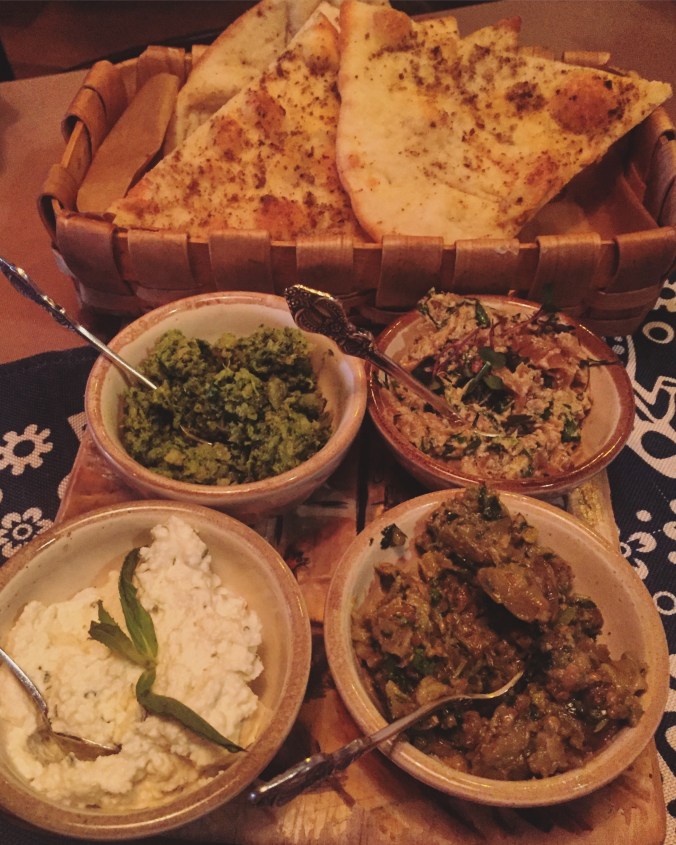
IMG_8535

A bit of food heaven at Barbarestan.

After we we were done with the food, the restaurant’s owner came over for a chat. He told us a fascinating story; the story was that he went to an antique market and found a very old book, which was written by “the first feminist of Georgia”, Barbara Georgadze. It was a recipe book, and this was the birth of the restaurant, and up until now, they still use many of the recipes from that book for Barbarestan’s menu.

He then took us on a little tour downstairs, to the restaurant’s cellar. He explained that wine in Georgia was made not in oak barrels (like it is elsewhere), but in clay barrels instead. He also told us that Georgia was where wine was born. Later on, when we travelled around Kakheti, the famous wine making region of Georgia, we were fortunate to experience Georgia’s wine making traditions at their finest. 😍

We also realised that Tbilisi has a big big problem with pedestrian crossings, which are very few and far between in the city — and, more crucially, Georgian drivers don’t seem to give a monkey’s about them. We were, in fact, told that a number of people die every year trying to cross the road and drivers just drive off… Nice (not). 😬

Having refuelled our bodied and minds at Barbarestan, we got a cab to the old town an wondered around some more, and then we took a cable car.
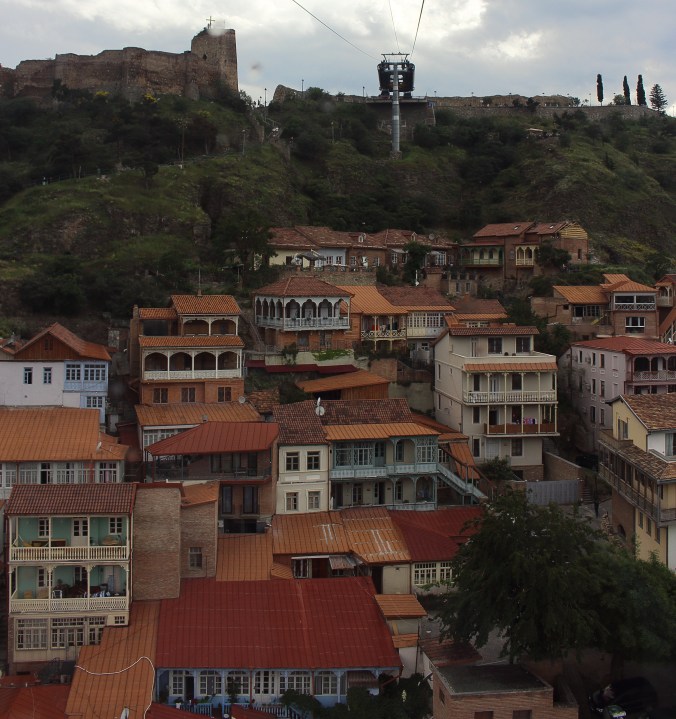
Tbilisi cable car

Inside the cable car!

The cable car was opened in 2012 and takes you over the Mrtkvari river and the old town all the way up to Narikala Fortress, which dates back to the 4th century, when it was a Persian citadel. The views of Tbilisi from up there were truly superb. 😍

View 2

Tbilisi views

In fact, Tbilisi has both a cable car and a funicular — according to Lonely Planet, my ultimate travel bible (I love travel guides — I am old fashioned like that 🙈), two of Tbilisi’s most exhilarating rides, so we were determined to try out both. Before we got to the funicular, however, we stopped by at Justina’s friend’s place, who was very kind and hospitable to us. We had a glass (or two…) of bubbly in her beautiful apartment, surrounded by her stunning paintings, while she shared with us her stories about Georgia. We ate cheese from the Phoka Nunnery, where nuns make chocolate and cheese, and listened to her in fascination.

We learnt, for example, that the richest man in Georgia is called Bidzina Ivanishvili; he was also Prime Minister of Georgia in 2012-2013 and is still the man behind major political decisions.

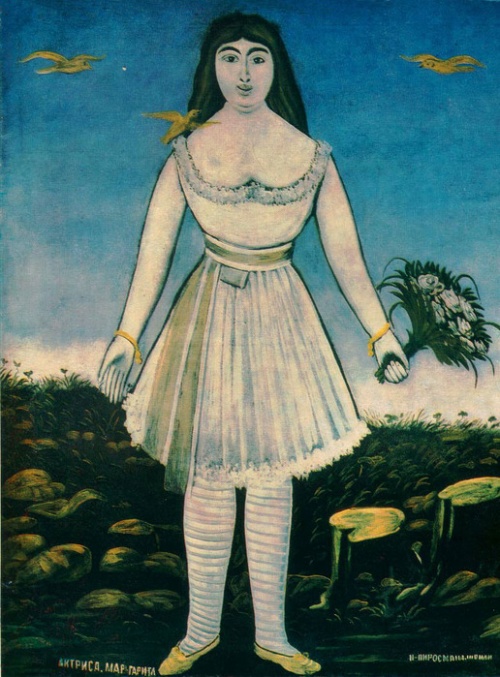
We also learnt a beautiful story behind one of the most iconic Russian songs — although this is actually a bit misleading, because the song was originally written by a very famous Latvian composer, Raimonds Pauls; it was subsequently covered by a Russian singer Alla Pugacheva (there have also been a number of other international covers — inexplicably, Vietnamese, Korean and Japanese singers seem to be particularly fond of it!). Anyhow, the Russian version of the song is called ‘Million Scarlet Roses’, and you can listen to it here. It tells a story of an artist, who fell in love with an actress who loved flowers; he sold all his modest possessions — his little house and canvasses — to buy a million scarlet roses, which he then lay in front of her house, all in a (futile) attempt to win her heart. And so it turned out that this story is based on a true story, the story of a Georgian artist, Niko Pirosmani, who fell in love with a French actress, Margarita, in Tiflis (as Tbilisi was known at the time). More on Pirosmani and his paintings can be found here — and here’s his painting on Margarita:

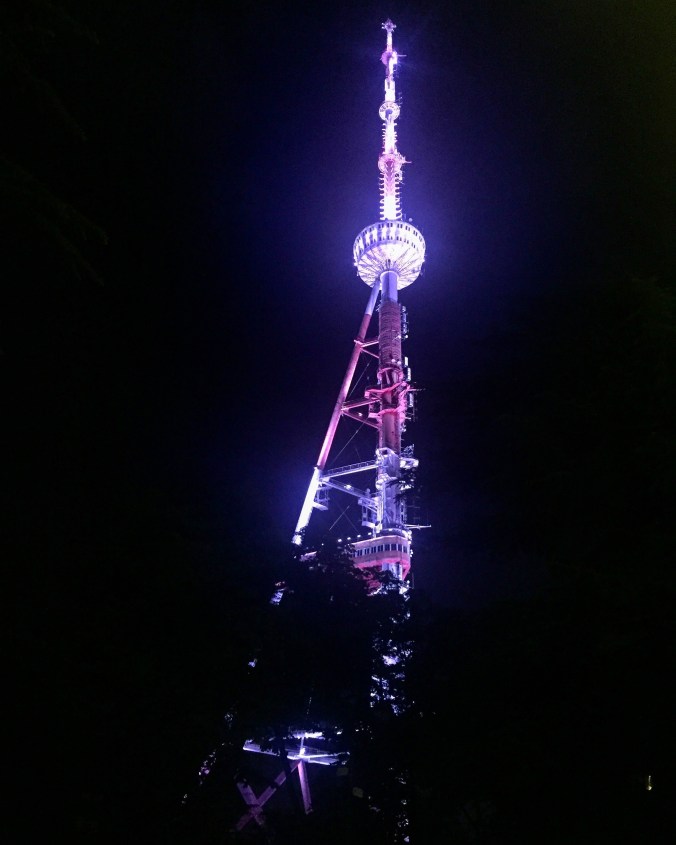
In the evening, we took the funicular up to Mt Mtatsminda, which literally means ‘The Wholly Mountain’. Mt Mtatsminda offers more stunning views of the city and is topped by a 210m high TV tower.
IMG_8540

TV tower atop Mt Mtatsminda.

In contrast to the cable car, however, the funicular is much, much older: it first opened in 1905, and was a truly international project: French, Italian, Belgian, Polish, Russian and Georgian engineers, architects and builders were all involved.  Interestingly, the original purpose behind the construction of the funicular was a practical one: at the end of the 19th century, the expansion of Tbilisi within the then city limits along the Mtkveri river was difficult, and so it was decided to build ‘Upper Tbilisi’ on Mtatsminda. The funicular was meant to connect the the ‘Upper Tbilisi’ with the existing ‘Lower Tbilisi’.

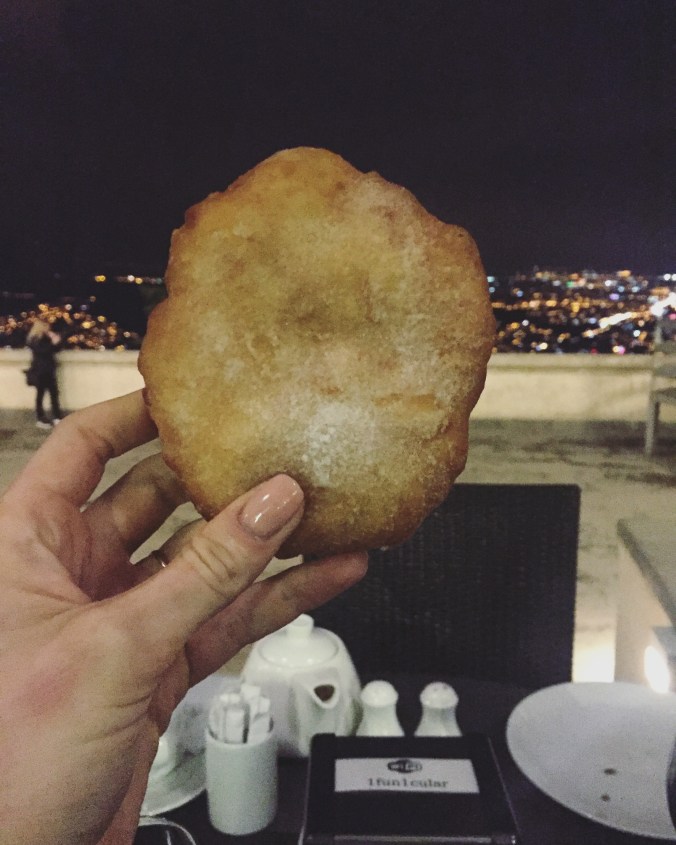
Now, the real reason we wanted to take the funicular up Mtatsminda that night was because we had heard that Funicular Complex offered the best ponchiki in the history of time (the views came close second!). For the uninitiated, ponchiki are Russian donut holes, and we were really craving some.

Funicular Complex did not disappoint — whilst it was undoubtedly death by sugar, the ponchiki we had were just divine, so it was all worth it.
IMG_8543

Ponchiki on Mtatsminda — divine!

We also ordered some Georgian wine (of course!) and sat there for ages, admiring the view of the city in flickering lights, drinking Georgian vino, talking about love and life, and eating our ponchiki. 

Tbilisi by night

Tbilisi by night, Mt Mtatsminda

And this was the end of our first few days in Tbilisi. 💙


Edinburgh (and beyond) with Edenburg (Part III: The Isle of Skye and Central Highlands)

“Lovest thou mountains great,

Peaks to the clouds that soar,

Corrie and fell where eagle dwell,

And cataracts rush evermore?

Lovest thou green grassy glades,

By the sunshine sweetly kist,

Murmuring waves and echoing caves?

Then go the the Isle of Mist.”

Alexander Nicholson, The Isle of Skye

xxx

We crossed the Skye Bridge to the Isle of Skye, Scotland’s second largest island, with a population of 10,000.

It is said that Skye takes its name from the Norse word skuy (“misty isle”) — alternatively, skýey or skuyö (“isle of cloud”).

Our plan was to spend 2 nights and one full day on Skye, staying with a local family we found on AirBNB. Amusingly (again, only in Scotland!), the directions for the place we received were by reference to cattle grids: get to Hebridean Hotel in Broadford, take the road to the left and count kettle grids as you keep driving: you need to count exactly four (if you’ve counted more than four, you’ve gone too far); after the fourth one, take the road to the right, and you will get to such and and such settlement, and see the house of such and such description on your right. 

We diligently followed the instructions and counted the kettle grids, but, despite our best efforts, after the third kettle grid we found ourselves on a private land of some Scottish farmer. The Scottish farmer was friendly but a little suspicious of us. Meanwhile, my driver became nervous and frustrated (as he frequently does when he gets lost on the road), and after some circling around in an attempt to find the right turn, I made the executive decision to go back to the starting point, to Hebridean Hotel. And so we went back and started afresh, one-two-three-four cattle grids, and this time it worked.

The house we were staying in was a beautiful countryside house with stunning views. And it was owned by a very friendly family, who were very kind to us during our stay: Joanna, the lady of the house (and, it seemed to me, the “neck” of the household), her husband and their son. The house had a great fireplace, which warmed not just your body, but your soul. Most crucially, however, the house had a big black dog, a black labrador. As soon as we paid attention to her, she turned into a small puppy, running and jumping around, rolling on the floor and asking to be petted — and she maintained this adorable behaviour throughout our stay. The dog was 4.5 year old but she was one of those dogs that never grow up — always a puppy in spirit, stuck in the ever ageing body. I once knew a dog who possessed the same youthful spirit, but he was quite a bit older at the time — 12, to be exact, and it was a little sad because all he wanted to do was to play around but his back legs had started to give way. It was a little heartbreaking. But, anyway, this dog was still young, and so she could indulge in all the playfulness and foolishness in the world her heart desired.

That night, we went out for dinner to what appeared to be the only restaurant in Broadford, Cafe Sia. The food was decent enough, but it took a while to arrive because the place, which was seizable, was only not very well staffed: we only saw two waitresses, and the poor girls appeared quite stressed as they were whooshing around the place, trying to deal with competing demands of many hungry customers.  

J kept himself entertained by pulling faces while we were waiting for our food.

image1 (2)

When you discover that your travel companion is crazy but you are in a remote place is Scotland and have nowhere to run.

After the dinner, we drove back to our cosy temporary home, where whiskey by the fireplace awaited us. We chatted for a bit with our hosts and their two American guests. Joanna told us that sometimes a deer would wonder into their garden — a deer! just like that! — and then get its antlers stuck in something; it would then try to break free and lose its antlers in the process, and she would wake up to a pair of antlers in her garden.

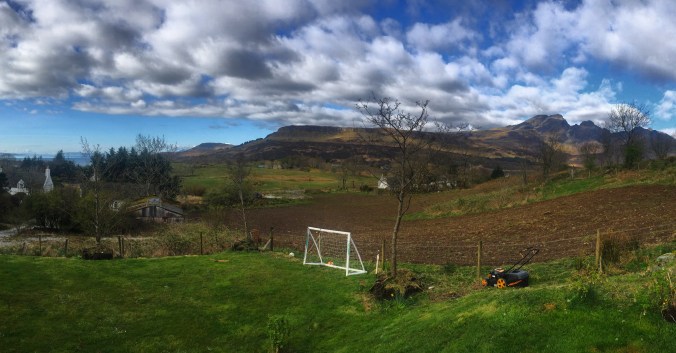
We did not wake up to a pair of antlers next morning, but to these beautiful views instead:

image3

At 8am, we were given a very delicious and nutritious breakfast and devised our plan of action for the day. Joanna told us that from her — extensive, as it turned our — hiking experience, one of the best hikes was up Blà Bheinn (Blaven), which incidentally happened to be only a short drive from Joanna’s place.

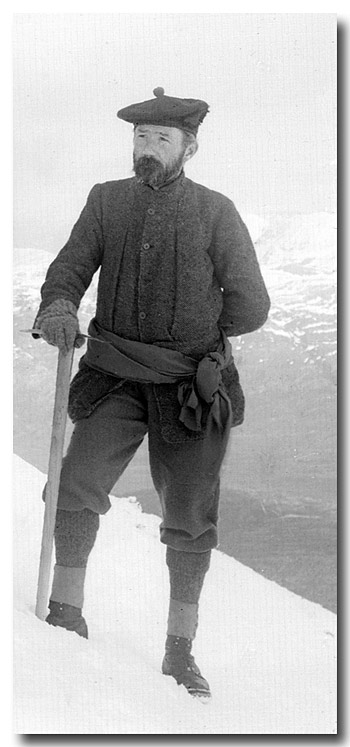
Blà Bheinn is officially a Munro. In case you, like us before, haven’t a clue what a Munro is, here’s a (very) brief etymology. At the end of the 19th century, this gentleman, Sir Hugh Munro, a Scottish mountaineer —

Munro

Source: http://www.smc.org.uk/

— compiled a list of all Scottish mountains measuring over 3,000ft (914m) in height. His name has since come to denote all mountains in Scotland over 914m, of which there are 282. Munro bagging is a national sport in Scotland, and Munro baggers are hikers who attempt to climb — bag — all of the Munros. Once you have, you are entitled to be called a Munroist: apparently there are over 5,000 of them. Joanna told us that she had bagged 99 Munros to date. (Smaller hills in Scotland also have funky names: hills of 700m with a drop of at least 150m on all sides are called Corbetts, hills over 610m — Donalds, and baby hills over 90m — McPhies.)

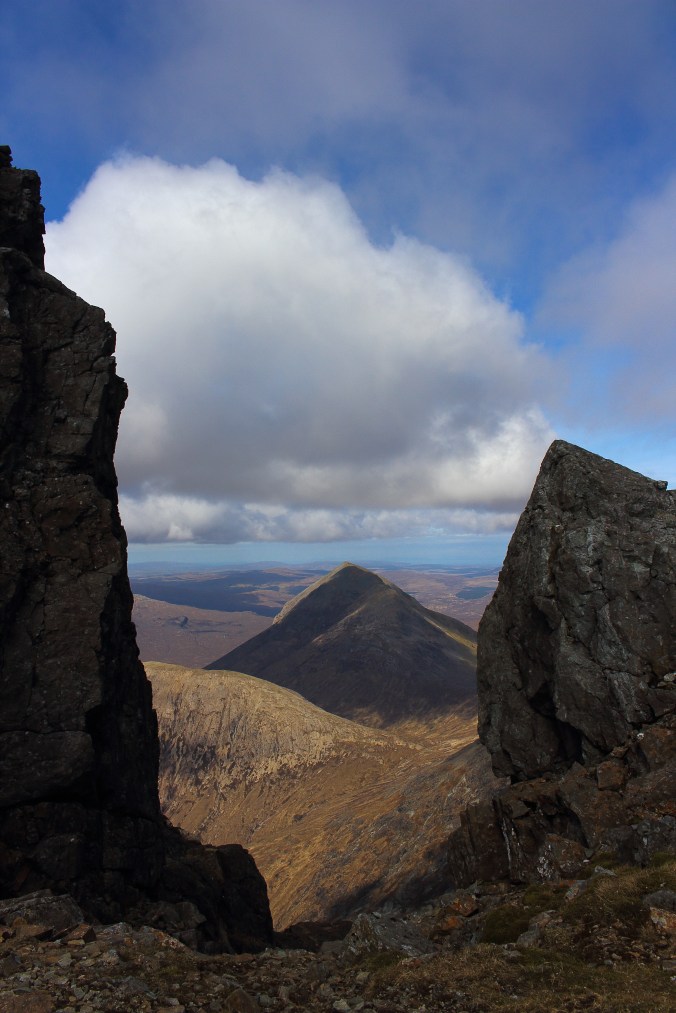
Blà Bheinn is 928m heigh and possible meanings of its name are Blue Mountain, Warm Mountain and Mountain of Bloom. It is part of the Cuillin— a range of rocky mountains on Skye (also known as the “Black Cuillin”, to be distinguished from the “Red Cuillin”, which comprises lower and less rocky hills).

The hike was only about 8km return but took us nearly 6 hours to complete. According to Walking Highlands, Blà Bheinn’s “ascent is straightforward by Cuillin standards”, but we did not think it was straightforward at all. When J and I discussed the hike afterwards, on the basis of our combined hiking expecze, we assessed the level of difficulty to be 7/10. Had it been a longer hike and in higher altitudes, it would have been really rather challenging.

This slideshow requires JavaScript.

What made the hike difficult was a combination of the following things: (i) a complete lack of signposting; (ii) quite a steep assent when we reached the last leg of the hike; and (iii) an abundance of gravel, which meant you had to concentrate and choose your step carefully; this made (ii) even more difficult.

Luckily, (i) was quickly resolved, when half an hour or so into the hike, we met a lovely pair of fellow hikers, a local man and his daughter, who was over for a visit. They ended up being our guides as the man had done this hike before.  

About 20 minutes before we reached the top, there was a quite a big rock we needed to get on top of to continue. J kindly offered to give me a “boost”. However, J must have underestimated that, being the fit girl that I am 😜, I already have sufficient strength in my upper body. I pushed myself up with my arms, which, in combination with J’s “boost”, resulted in me landing on the ill-fated rock, face-down. Luckily, my sunglasses ended up taking most of the beating from the rock, as it were, and I only got a scratch and a few bumps on my forehead. As our guide, the Skye man, aptly noted: “It was you against the mountain — and you won”. He also said: “The mountain now has some of your DNA” — and it is true, and this made the experience feel even more special and personal.

The last leg of the hike was also scary because there were sheer drops in a few places — and no barriers. An exhilarating experience!

IMG_6971

Almost at the summit of Blà Bheinn. A sheer drop only a few meters away — don’t get too close!

And then we finally reached the top.

Standing atop Blà Bheinn, we felt a great sense of achievement, even though it was freezing cold, Arctic winds were mercilessly blowing into our faces and trying to get under our skin, and there was still some snow on the summit.

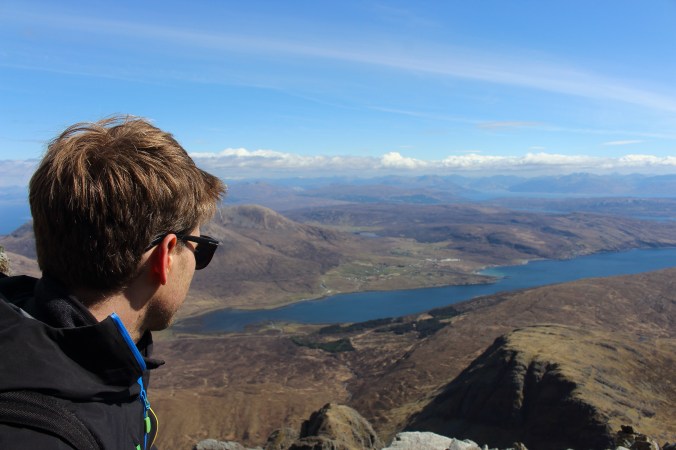
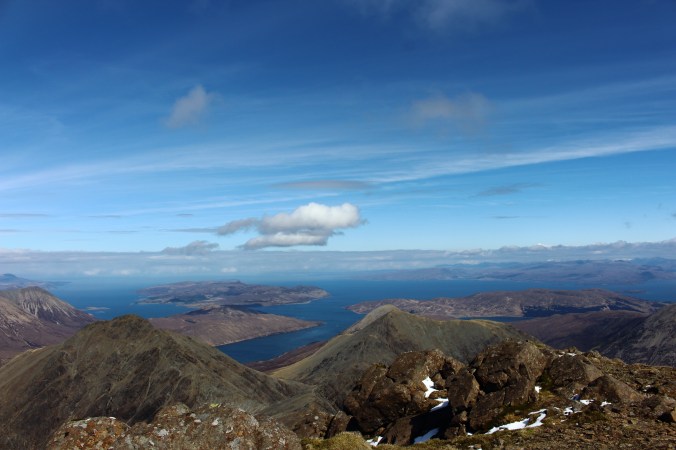
But THE VIEWS! 😍😍😍

IMG_7027IMG_6984

The views spanned 360º and were to die for, truly. It was a super clear day and our guides kept telling us how incredibly lucky we were, that this weather doesn’t grace Skye with its presence too often.

The pictures above don’t do justice to the stunning views — perhaps the video will do a better job:

The way down was quicker but was still quite challenging due to gravel. It was quite hard on the knees.

After the hike, we felt that our lives were complete. J told me: “Isn’t it amazing how much you can achieve in one day”. And it is amazing — yet so much valuable time is wasted every day on things that are meaningless. This made me think of the S-Town podcast (if you haven’t listed to it, you ought to!) and its character, John. Here is an excerpt from John’s suicide note: 

“But the best times of my life, I realize, were the times I spent in the forest and field. I’ve walked in solitude besides my own babbling creek, and wondered at the undulations, meanderings, and tiny atolls that were occasionally swept into its midst. I’ve spent time in idle palaver with Violets, Lileas, Sage, Heliopsis and Monkshood, and marveled at the mystery of Monotropa uniflora. […]

Before I could commence this discourse, I spent a few hours out under the night’s sky reacquainting myself with the constellations like old friends. Sometimes I just spend hours playing my records, sometimes I took my record players and CD players apart, just to peek inside and admire the engineering of their incongruous entrails. Sometimes I watched Laverne & Shirley or old movies or Star Trek. Sometimes I sat in the dark and listened to the creaking of the old house.

I’ve lived on this blue orb now for about 17,600 days, and when I look around me and see the leaden dispiritedness that envelops so many persons, both young and old, I know that if I died tonight my life has been inestimably better than that of most of my compatriots. […]  I’d hope that all persons reading this can enjoy some of the aspects of life that I have enjoyed, as well as those aspects that I never will and will take cognizance of the number of waiting days he has remaining and use them prudently.”

I think that mountains have a tendency to make those who come in contact with them quite philosophical — and Scottish mountains are no exception.

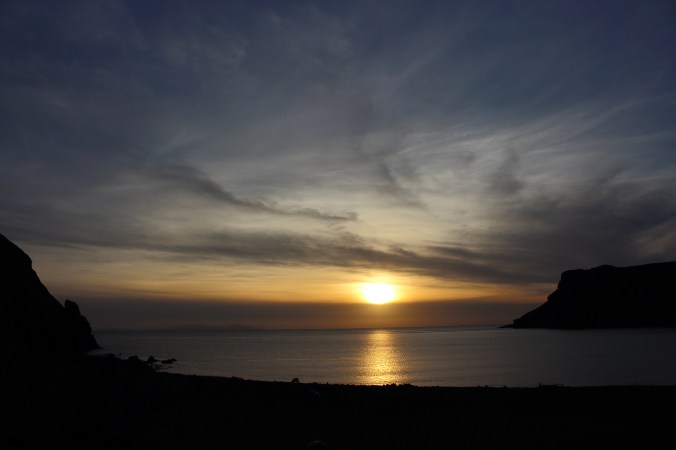
We then drove to Talisker Bay, where Diageo’s Talisker Distillery is located. We got to the beach at around 8pm, just as the sun was setting down. 

IMG_7107IMG_7127

The bay itself is stunning: it is surrounded by rocks, and there is also a waterfall at the far end of the beach.

Time has flown by too quickly and, before we knew it, our wee Scottish holiday was nearly over. On day 5, we left Skye early in the morning and drove south, back where were started; we were flying back to London from Edinburgh in the evening.

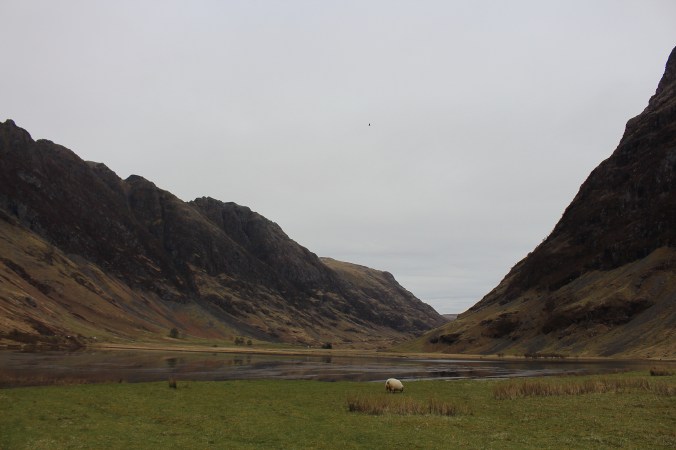
After a brief pitstop in Fort William, where were refuelled our bodies and minds with coffee, we continued towards Glen Coe. Glen Coe is probably Scotland’s most famous glen. And no wonder — it very scenic.

IMG_7183IMG_7186

But Glen Coe has some dark past. This is where the Massacre of Glen Coe, possibly one of the worst atrocities to have been committed in Scotland, took place on 13 February 1692.

After the Glorious Revolution of 1692, the Catholic King James VII was ousted, and the Protestant King William II (King William of Orange) took the British throne. There followed a series of battles, in which supporters of James (Jacobites), most whom were from the Highlands, fought against William. William wanted to quash Jacobite loyalties and offered all clan chief an amnesty, provided they swore an oath of loyalty to him by 1 January 1688.

The MacDonalds of Glen Coe were part of the clan MacDonald (which briefly appeared in Part II of this post). Glen Coe had been home to the MacDonalds since the early 14th century, when they supported Robert the Bruce (see Part I of this post). The chief of the MacDonalds of Glen Coe at the time was Alastair MacDonald, who was known as Maclain.

Maclain was 3 days late in taking the oath in Inveraray — he was slowed down by bad weather, and he was also detained for a day by the Campbells, a clan hostile to the MacDonalds. The Secretary of State at the time, John Dalrymple, Master of Stair, decided to use this for his own political agenda. Dalrymple was actually a Lowlander and he did not much like the Highlanders because he thought that Scotland’s interests would be better served in a union with England — and, apparently, he particularly disliked the MacDonalds on Glen Coe. He refused to accept the late oath and ordered that the MacDonalds be slaughtered — “put all to the sword under seventy”. A company of 120 soldiers arrived 12 days before the massacre, under the cover of collecting taxes. The Highland code required clans to provide hospitality to travellers, and the MacDonalds hosted the soldiers in their homes. On the 13 February, the soldiers received their orders and slaughtered the MacDonalds — 38 were killed in total, including Maclain. It appears that  some soldiers alerted the MacDonalds to their fate, and some escaped, but 40 more died from exposure to the elements.

We drove to Glencoe village, where there is a monument to those killed in the Massacre of Glen Coe.

It was difficult to shake off the horror of that night as we drove around Glen Coe — 300 years later, it still felt very much present. I saw some beautiful horses in Glencoe village —

IMG_7161

— and I love horses, but the feeling of darkness and gloom did not dissipate for a long time.

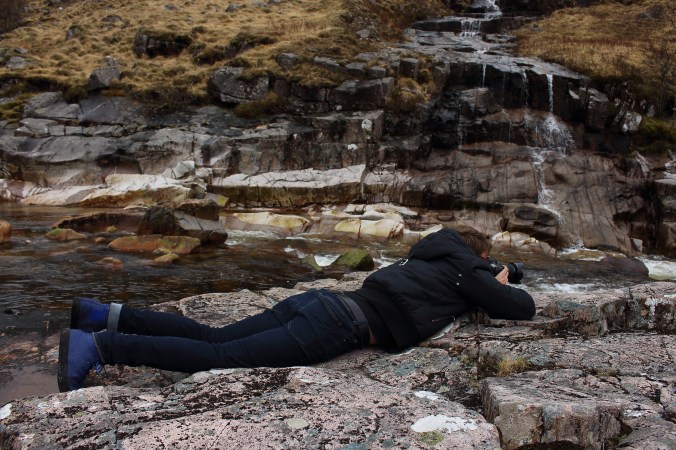
We continued our drive south. We drove off the main road, not really knowing very well where we were driving and why, but soon ended up next to quite a fast river. It was a nice enough river with pleasantly looking surroundings, but we spent a disproportionately long amount of time here because J was trying to take the perfect picture. To that end, he got himself into bizarre and seemingly uncomfortable poses.

IMG_7222

He will do anything for that perfect shot.

I always admire J’s determination when it comes to photography and the lengths he goes to to get that perfect shot. J is a talented photographer and photography makes him passionate, and it’s a wonderful thing. I have just finished reading a book by John Steinbeck called “A Russian Journal”, which is a documentary account of the post-WWII Soviet Union (and it is excellent). He travelled around with Robert Capa, a war photographer and photo journalist (and a co-funder of Magnum Photos). This is what he writes about Capa, with endearing warmth and humour:

“Capa marshalled his ten pieces of luggage and clucked around them like a mother hen. He saw them into a locked room. He wanted the airport officials again and again that they must mount guard over them. And he was never satisfied for a moment while he was away from them. Normally lighthearted and gay, Capa becomes a tyrant and a worrier where his cameras are concerned.”

This may very well have been written about J. 😊

Afterwards, we drove through Loch Lomond and The Trossachs National Park for a long time, along Loch Lomond (which is mainland Britain’s largest lake), past Stirling, and to Edinburgh.

And so ended our wee Scottish adventure (and I am happy to report that the Glasgow psychic’s prediction did not materialise). The trip was wonderful even if a little too short; you need 5 days for the Isle of Skye alone!

Scotland, I think we will be back. 💙

Edinburgh (and beyond) with Edenburg (Part II: The Highlands)

Day 2 of exploring Scotland. Our plan for day 2 and 3 was The Highlands (random fact: anyone who is not a Highlander, including Lowland Scots, is called Sassenach).

In the morning, J checked Traffic Scotland, which warned us that there were icy and snowy conditions on the road from Dingwall to Ullapool, and drivers were accordingly advised to exercise caution. In the context of the previous night, it sounded rather sinister; I was still feeling somewhat jittery after the Glasgow psychic experience. 

However, we proceeded as planned, picked up our rental car from the airport and drove north, into the realms of of the unknown, into Greater Scotland.

Drive north after L N

Despite my desire to explore a few castles, we somehow ended up taking the wrong turn for both Stirling Castle and Scone Palace (supposedly inadvertently, but J, who was driving, is a lot less keen on castles).

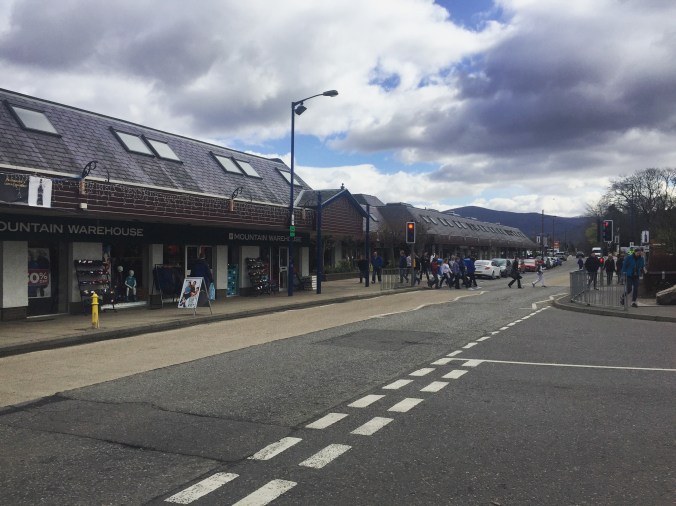
We drove through the Cairngorms National Park and stopped in Aviemore to have lunch in a lovely little place called Mountain Cafe, which served delicious hamburgers. Aviemore is a tiny town. Albeit conveniently located on many travellers’ route, the town did not seem remarkable in any way —

Mountain cafe town

— but I couldn’t shake off  the feeling that Aviemore and the surrounding territory bore an uncanny resemblance to the South Island in New Zealand. 

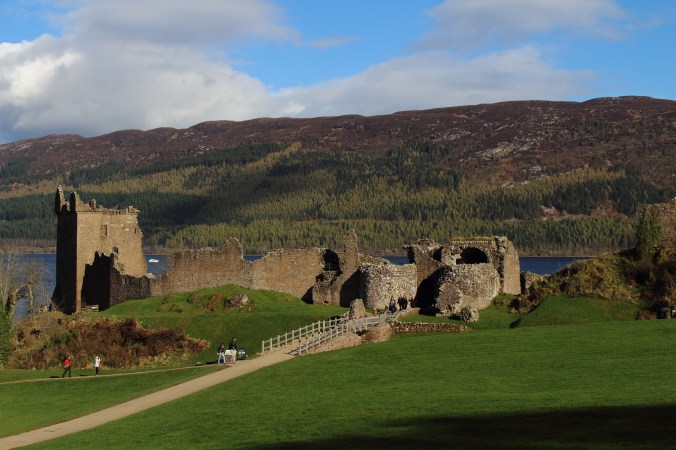
My insistence to seek out a Scottish castle eventually paid off; after Aviemore, we drove to Urquhart Castle, which sits, picture-perfect, beside Loch Ness. Having arrived half an hour or so before the closing time, we did not have long to look around, but it was enough to get a feel of the place. 

The early history of the castle — much like, it seems to me, a lot of Scottish history — is intrinsically linked with the history of the Scottish resistance against the English: during the Wars of Independence, the castle passed back and forth between the opposing sides; in fact, the first documentary record of Urquhart dates back to 1296, when Edward I (Edward Longshanks), who already made an appearance in Part I of this post, captured it. When Robert the Bruce (also featured in Part I) became King of Scots in 1306, the castle returned back under Scottish control and, after he died in 1332, was the only Highland castle to hold out against the English. During the 15th and 16th centuries, the power struggle continued, but with different protagonists this time: the Crown and MacDonald Lords of the Isles (more on the MacDonald clan soon to come in Part III of this post), who raided the castle on several occasions.

IMG_6644 (U castle - Loch Ness)

Turbulent history aside, another part — an integral part, I should say — of Loch Ness is, of course, the legendary mythical creature a.k.a. the Loch Ness Monster a.k.a. Nessy. Of course, everyone knows about Nessy — but in case you are interested, there have been many reported sightings on the monster with the earliest one in 565, when, the story goes, Saint Columba, an Irish monk, made Nessy flee when he made the sign of the cross and said: “Go no further. Do not touch the man. Go back at once”.  There was then a spike in reported sightings in 1933, the year considered to be the beginning of the Loch Ness Monster phenomenon as we know it today. One the most famous ones was a sighting by Mr and Mrs Spicer on 22 July that year, described by Mr Spicer as “an abomination”; to give you a bit more flavour:

“First we saw an undulating sort of neck, a little thicker than an elephant’s trunk. It did not move in the usual reptilian fashion but, with three arches, it shot across the road until a ponderous body about four feet high came into view. […] It has been a loathsome sight. […] It was terrible. Its colour, so far as the body was concerned, could be called a dark elephant grey. It looked like a huge snail with a long neck.”

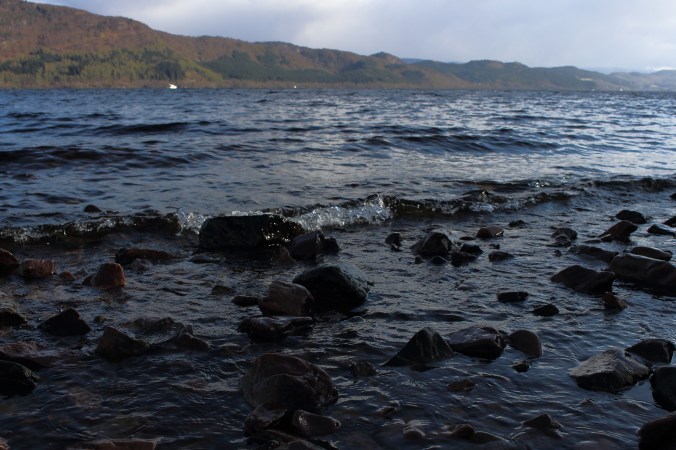
And look at these dark, mysterious  waters of the loch — don’t they excite imagination; can’t you just about make out the bend of her elongated body under the water surface? 😉

IMG_6679 (Loch Ness)

The Official Loch Ness Monster Sightings Register, set up by the Official Loch Ness Monster Fan Club in 1996, is, as the name suggests, a register of all recorded Nessie sightings to date — 1,083 in total, with 7 in 2016.  The last reported sighting was around 8 months ago, in August last year (when not even one, by two creatures were said to have been spotted near the shore). This is rather concerning to Nessie-ists: Gary Campbell, the keeper of the Register, told the Scotsman that he was “worried” by the lack of sightings, adding: “she seems to have disappeared”. Poor Nessie — but given that she’s apparently been around since at least 565… nothing lasts forever.

Everyone knows about Nessy — what I did not know, however, is that the lake monster phenomenon is not unique to Loch Ness. Every self-respecting lake, it seems, has one — see this Wikipedia list. Be it as it may, Nessy is a considerable source of money to the Scottish tourist industry: in 2012, it was estimated that 1 million people visited Loch Ness and the surrounding area each year, bringing c.£25m to the economy — and 85% of the visitors, were, apparently, attracted by the Nessie phenomenon. In recognition of this, in May 2014, a seminar called “Monster Marketing” was held in Inverness, exploring how businesses in the Highlands could cash in on Nessie further.

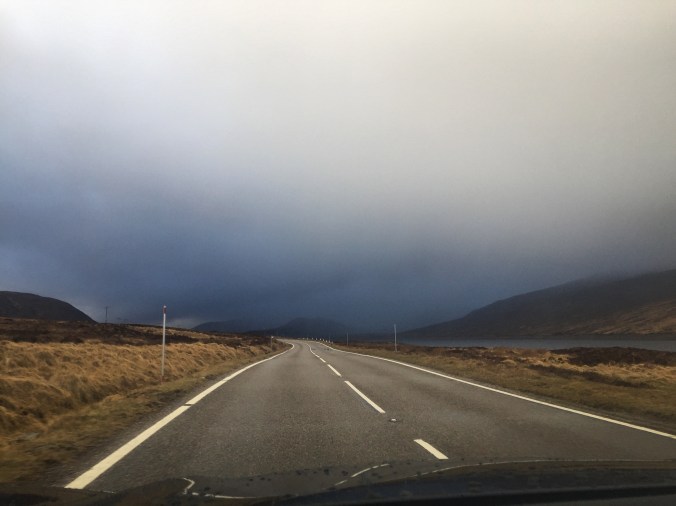
Having looked around and tickled our imagination with the Loch Ness Monster myth, we continued our drive north, to Ullapool, and what a stunning drive it was! I was perpetually in awe of the ever changing terrain — from rugged to forest, etc. And as if acting in unison, the weather kept changing too — from sunny to rainy and back to sunny again; truly, one experiences 4 seasons in a day in Scotland! It was a bit like being on a merry-go-round, if I can allow myself to indulge in an analogy for a second …

Drive north after L Ness

Another thing I kept noticing was an abundance of animals — primarily sheep, all bearing a mark, either red or blue — as well as how healthy the animals looked, grazing happily all day long come what may: sun, rain, fog… It added to the idyllic picture of Scotland that had already begun forming in my head.

IMG_6746 (animals north of Ullapool)

While we are on the subject of perception, Scotland also felt to me like a different country; albeit I accept I haven’t travelled that much around England, Scotland felt more rugged, more wild and more unexplored.

As the sun was setting down, we finally saw Ullapool, a pretty village on the shores of Loch Broom, beautiful in the rays of the evening sun.

Approach to Ullapool

Ullapool was our home for the night.

The next morning, we carbed up over breakfast in our B&B —

Ullapool breakfast

— appreciated the Ullapool harbour views —

IMG_6735 (Ullapool)

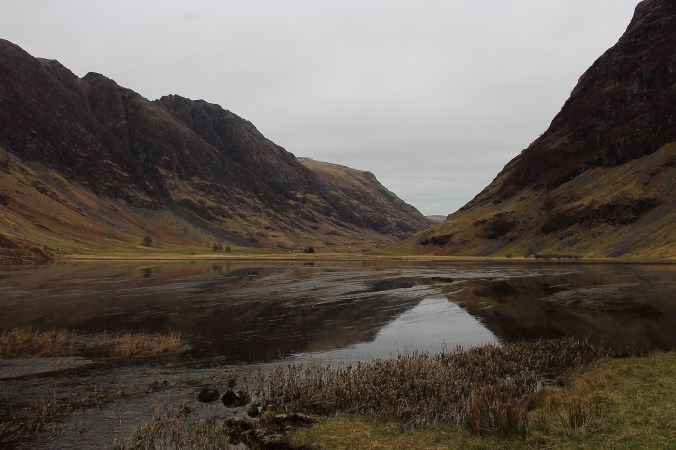
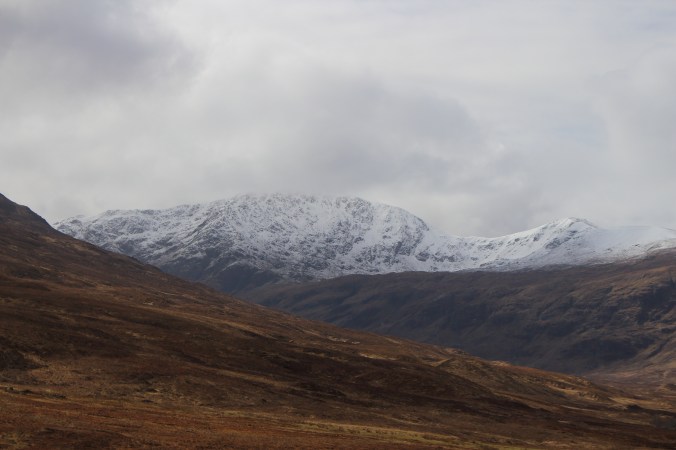
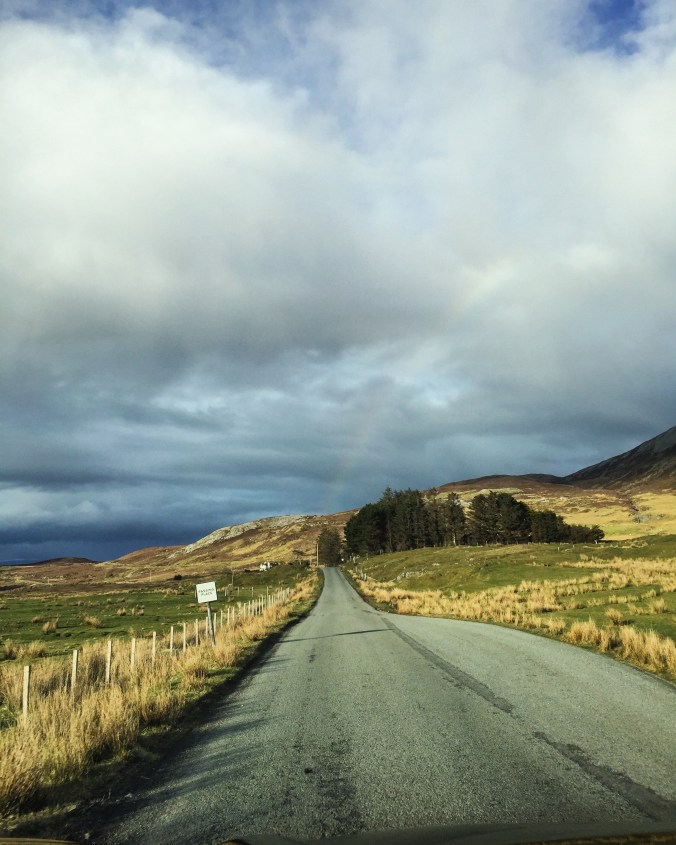
— and then embarked on a drive north, towards Kylesku. We did not drive all the way to Kylesku, but the drive was stunning nevertheless. The scenery was beautiful, in a kind of austere way: little houses scattered around, mountain peaks still covered in snow… Although the weather was grey that morning, it complimented the scenery and enhanced it in a beautiful way. 

IMG_6750 (drive up from Ullapool)

IMG_6777 (mountains in snow 2)

IMG_6774 (mountains in snow)

We stopped and admired the “Deep freeze mountains” for a while — 

IMG_6765 (mountains north of Ullapool)

— and learnt from the tourist sign that Scotland was covered by ice until around 15,000 years ago, when the climate warmed and the ice melted rapidly. It then returned 2,000 years ago in the form of glaciers (like the ones in Iceland today). This was what formed this beautiful landscape.

We had to turn around to drive back to Ullapool (on the side of the road, we saw a sign offering  “eggs for sale”… only in Scotland :-)), conscious of the limited amount of time we had. I must say that, as the trip progressed, I became more and more astonished that such a relatively small territory has so much diversity — countless lochs, lochans (=small lakes), linns (=waterfalls), glens, braes (=hills), burns (=streams), denes (=valleys), mountains, castles… Our itinerary was certainly a wee too ambitious for the 5 days we had in our disposal, and more than a few times my excitement about a potential destination was unceremoniously curtailed by J: “Can’t go — tight timetable”

We returned to Ullapool and took the road towards Gairloch. The road was lonely and beautiful — it felt like it was only us in the whole world. 

IMG_6792 (man)

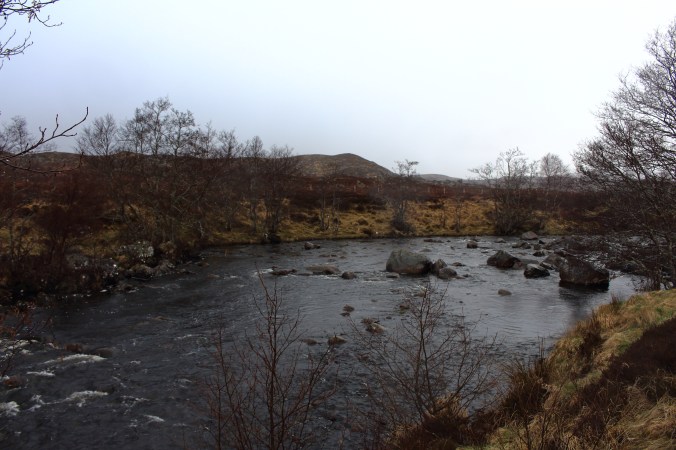
We stumbled across a beautiful stream, fast and bursting with energy, and for a while just watched the water move. 

IMG_6701 (stream)

Next to the stream

And then we made friends with a local dog. 🙂 

Dog

The landscape changed again when began driving along the coast line, which offered some stunning views. The downside, of course, was that everything took us x3 as long as Google Maps predicted, because we constantly kept pulling over and jumping out of the car to take pictures… It’s like like the theatre: on every turn of the road, the curtain is drawn, and a new set reveals itself, and I can’t contain my excitement and ask J to pull over again, because, inexplicably, The Minch looks completely different from the moment ago when it was framed by different mountain peaks, and oh how disappointing it is that a picture is never as good as the reality (well, at least not in the case of the photos I take — in the case of the talented J, a picture really does speak a thousand words)… 

IMG_6857 (stage analogy)round the corner

We briefly stopped in Gairloch and then continued south east towards Kinlochewe —

Approach to L Clair

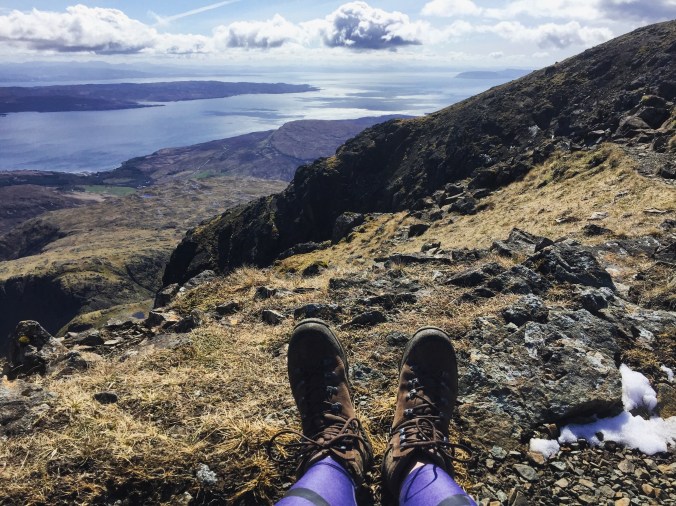
— intending to do a little hike around Loch Clair. My feet were itching for a hike — I brought my hiking boots on this trip; these babies are German-made, proper, sturdy hiking shoes; they may not look very appealing, but they are so comfortable, light yet stable at same time, that you feel invincible wearing them, you feel like you can conquer any mountain… And — spoiler alert, this will be covered in Part III — they were put to a serious test the following day when we climbed a munro on the Isle of Skye —

IMG_6995

— once again, totally rocking it.

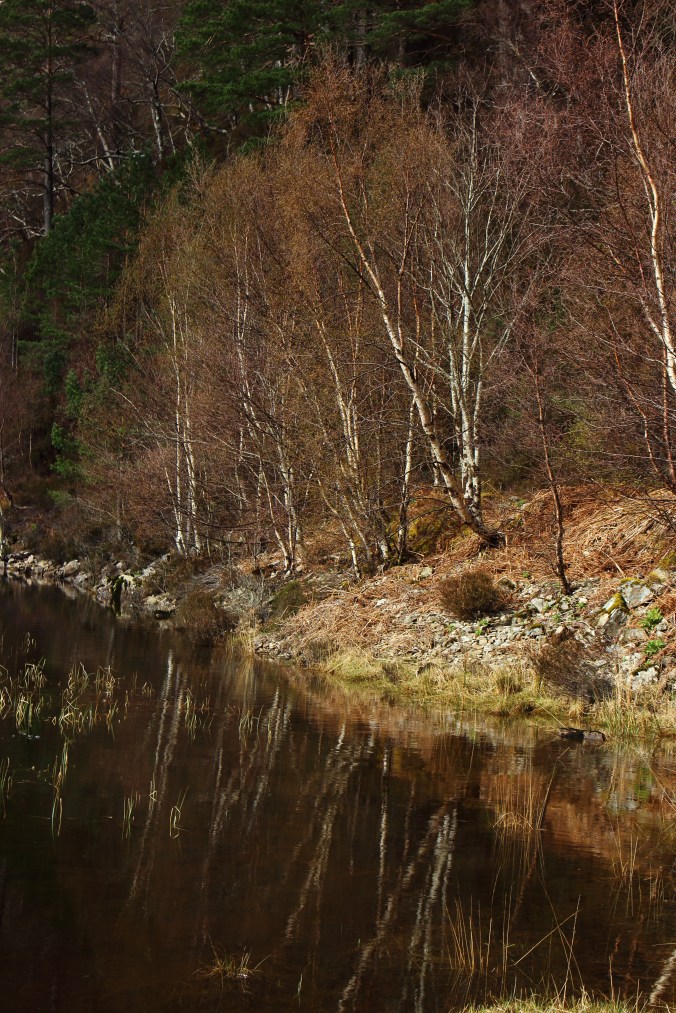
Meanwhile, Loch Clair offered a much more tamed hike — but what views! The mirror-like surface of the loch reflecting the surrounding trees and mountain peaks, with the music of the little streams gurgling quietly in the background… 

image1 (1)

Loch ClairLoch ClairIMG_6905 (Loch Clair)

Loch Clair also appeared to have an abundance of moss — 

IMG_6892 (moss)

— and when I mentioned the medicinal properties of moss to J, he sounded very surprised (but I remember very vividly being given a decoction of moss, together with milk and honey, as a child to treat my never ending coughs!).

After the Loch Clair hike, we continued driving south towards the Isle of Skye. There was a fair bit of traffic now — and roads in that part of Scotland are, albeit nominally two-way, very narrow, so there are “passing places” everywhere (a widening of the road allowing two cars to pass), leading to the inevitable slowing down of the traffic flow. 

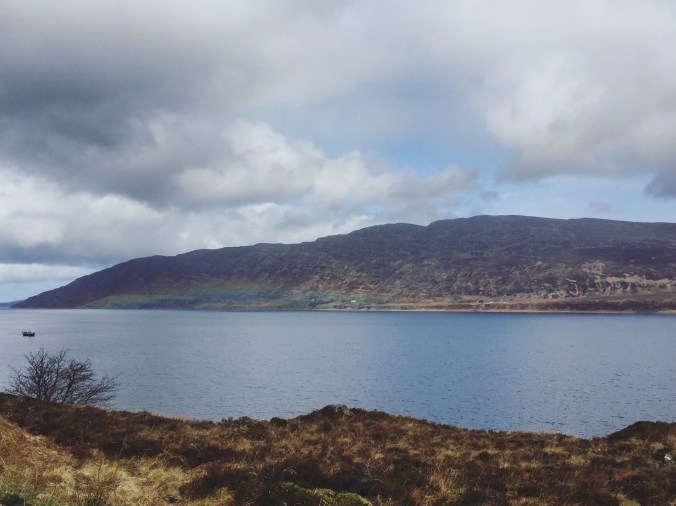
We saw a rainbow on the way —

Rainbow

— and another one later that day after we had crossed over to Skye —

Rainbow on Skye

— and I’m certain we saw at least one other rainbow in the course of the trip. I even began wondering whether there was something about Scotland that made the formation and appearance of rainbows more likely — Google offered no confirmation of this hypothesis, but I came across this stunning shot of a white rainbow, which appeared in Scotland in November last year.

….

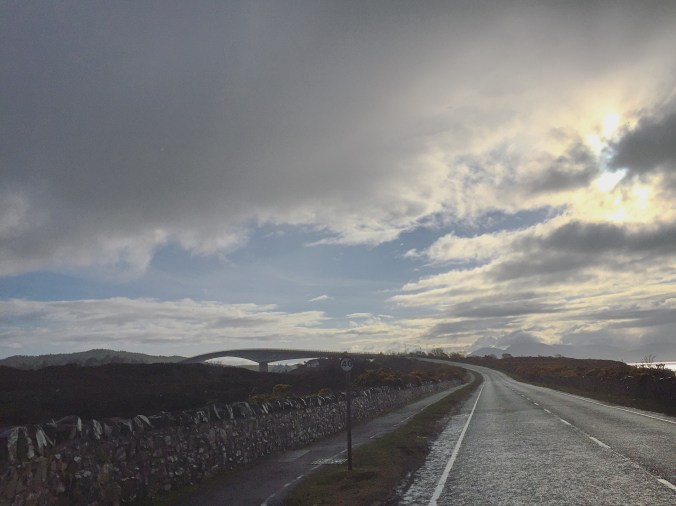
Finally, after some more driving, we saw the Skye Bridge in the distance. The Skye Bridge was built in 1995; before then, the only way to get to the island was by ferry. (For those who are interested, the Skye Bridge was the subject of controversy because one was required to pay a toll to cross the bridge (the tolls were based on the fares of the ferries the bridge had replaced). Until the toll system was finally abolished in 2004, the Skye Bridge was the most expensive toll bridge in Europe.)

As we drove towards the bridge —

Skye Bridge

— I couldn’t help but indulge in yet more — admittedly, somewhat corny — analogies: the Skye Bridge was a bridge that was about to take us into the skies (where is my favourite monkey-covering-up-its-mouth emoji when I need it most..!). In fairness though, it was a glorious early evening after the rain, and the Skye Bridge looked almost magical against the backdrop of the surrounding mountains.

Edinburgh (and beyond) with Edenburg (Part I: Edinburgh)

“When I lifted the Stone in Westminster Abbey, I felt Scotland’s soul was in my hands.”

Ian Hamilton

xxx

Edinburgh, day 1 of our wee Scottish Easter holiday.

On our first day, J and I did some petty touristy things (J’s first time in the city, so we had to). Nevertheless, it was lovely… until the evening, when something freaky happened — but I shall keep you in suspense for the time being.

Our day started quite late because we slept in (shock horror; over breakfast — while listening to this beauty —

— we swore that we’d be getting up bright and early for the rest of our Scottish holiday (and we did stick to it)).

We walked up to Princes Street and climbed atop Castle Rock to see Edinburgh Castle up close (I did warn you — touristy).

Something I did not notice last time I was in the city (back in 2014) were the statues of William Wallace and Robert the Bruce at the entrance gateway of the Castle.


William Wallace (who, to many post 1995, will forever look like Mel Gibson) and Robert the Bruce are probably (at least to the initiated like myself) the most famous Scottish patriots; Robert the Bruce, in particular, secured a victory over the English at Bannockburn in 1314, which is one of the most celebrated moments in Scottish history; Wallace was also one of the central figures of the Wars of Scottish Independence.

Everywhere you go in Edinburgh, there is history (a slight exaggeration, perhaps — but seriously, it’s incredibly historic, for lack of a better word). I am, of course, not proposing to offer a comprehensive account of the history of the city in this post — but I can’t resist a temptation to relay what is probably my favourite Scottish story: the story of the Stone of Destiny and its return back to Scotland after being in Westminster Abbey for many centuries.

The Stone of Destiny (also referred to as the Stone of Scone and the Coronation Stone) is quite a grand name, and the name is justified: the Stone played a pivotal role in the coronation of early Scottish monarchs (who placed their feet on the Stone during coronation). It is also believed that the Stone of Destiny is, in fact, the Stone of Jacob: the stone used as a pillow by the patriarch Jacob in biblical times. In 1296, however, the Stone of Destiny was removed from the Scone Palace (near Perth) by Edward I (known as Edward Longshanks and the “Hammer of the Scots”) as spoils of war and taken to Westminster Abbey. There, it was fitted into a wooden chair (so-called “King Edward’s Chair”), on which almost every English and British monarch — including the current one — was subsequently crowned.

…Fast forward from 1296 to 1950. In 1950, 4 Scottish students, Ian Hamilton (who later became a QC), Gavin Vernon, Kay Matheson and Alan Stuart, devised a bold plan which would culminate in the return of the Stone of Destiny to Scotland. On Christmas Day 1950, they removed the Stone from Westminster Abbey, having dropped  and broken it into two uneven parts in the process (it also landed on one of the conspirators, who broke two of his toes). They eventually managed to remove the Stone, now in two parts (which, according to Hamilton, was more handy as the Stone was no feather) from the Abbey and drove north in two cars. The theft of the Stone was quickly discovered and the border between Scotland and England was closed — apparently, for the first time in 400 years.  Kay Matheson, who had the smaller piece of the Stone in her car, left it with a friend in the Midlands, whilst Vernon, Hamilton and Stuart dug their part of the Stone somewhere in the in a field in Kent. The conspirators then returned to Scotland, but a fortnight later Hamilton succeeded in recovering the two pieces and brought them back to Glasgow, where the Stone was mended. Eventually, Vernon, Stuart and Hamilton delivered the Stone to the ruined Abbey of Arbroath, where they had arranged to meet two Arbroath town councilors. The councilors then reported the presence of the Stone to the police, following which it was returned to Westminster.

I find this story fascinating (a detailed account of it can be found here and here). Interestingly, back in the early 1950s, fewer than 1% of Scots supported the SNP — look at what we have 60+ years later, and perhaps Hamilton et al. did indeed succeed in raising awareness of what they apparently saw as Scotland’s subordinate status within the UK.

Now, fast forward to 1996: on 30 November (St Andrew’s Day), the Stone of Destiny was installed in Edinburgh Castle, where is currently remains. That was done by the Conservative Party in a transparent attempt to boost its popularity before the general election the year later. The plan failed spectacularly: Conservatives got zero seats.

In conclusion and to add to the mysteriousness of the Stone of Destiny, some believe that the stone which was lain in Edinburgh Castle is not, in fact, the real Stone — one of the sub-theories of this so-called “Westminster Stone theory” is that Edward was fooled and given an imitation of the Stone back in 1296. Who knows.

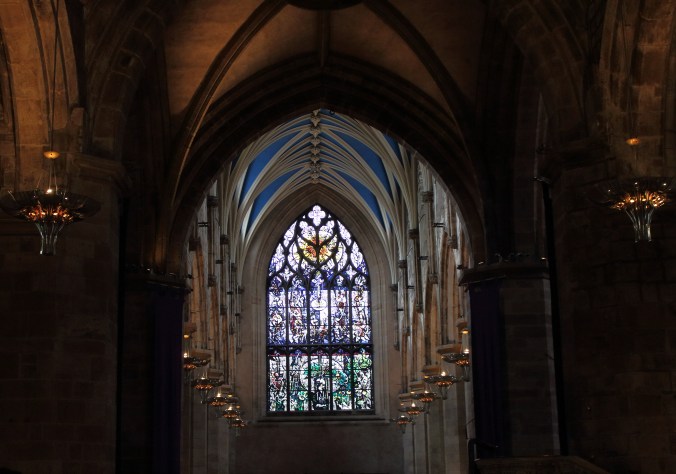
After Edinburgh Castle, we walked down to Royal Mile, past St Giles Cathedral —

IMG_6526

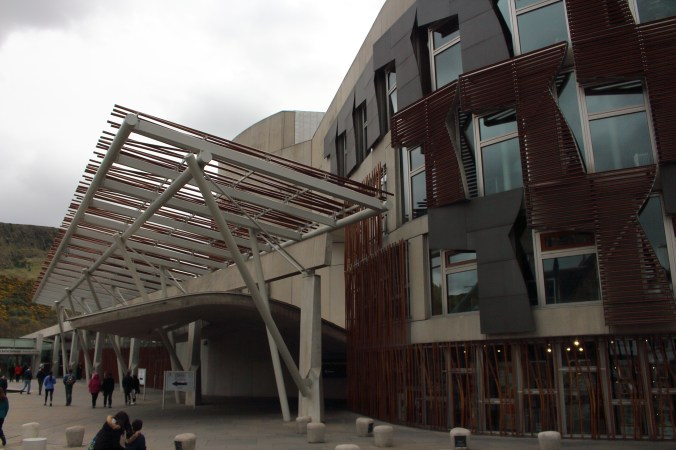
— Real Mary King’s Close and other historical buildings, to the Scottish Parliament Building.

The Parliament only opened in 2005 following the referendum in 1997, in which the Scots voted (overwhelmingly) to set up a Scottish parliament. Amusingly, when the previous referendum on the subject was held in 1979, 52% voted in favour of devolution, but the PM at the time, James Callaghan, decided that all those who did not vote should be counted as “No”, and the proposal was rejected. Can we re-assess the Brexit vote last year using the same principle please (only half joking…)?

The Parliament Building was designed by Enric Miralles, a Spanish architect, and is no ordinary building. It’s a pretty bizarre concrete formation.

IMG_6536IMG_6534

Miralles had a very unique architectural vision; it seems to me that he was, if I can call him that, a “poet-architect”. His concept for the design of the Parliament was an “intellectual vision was for a unique institution – open, anti-classical and non-hierarchical”. Miralles described the Scottish Parliament as “sitting in the land”: “[t]he Parliament sits in the land because it belongs to the Scottish Land. …We don’t want to forget that the Scottish Parliament will be in Edinburgh, but will belong to Scotland, to the Scottish Land. The Parliament should be able to reflect the land which it represents. The building should originate from the sloping base of Arthur’s seat and arrive into the city almost out of the rock”. See what I mean when I say “poet-architect”?

The fact that the design of the Parliament is so unusual and elaborate is actually quite ironic, because the original concept envisaged that the building would be modest: “We sat down with Donald [a Scottish politician and the driving force behind the project] and asked him, ‘what do we need?’ He replied: ‘I want a first-class, functional office building – but nothing too elaborate, boys! This is presbyterian Scotland!’“. Perhaps that was part of the reason why the initial estimate for the project, which was between £10 and £40 million (according to the final version of the White Paper on Scottish Devolution) was vastly exceeded — the final cost of the Scottish Parliament Building was c.430 million (in 2004, a report following a public inquiry — the Holyrood Inquiry — into the cost over-run and the delays in the construction of the Parliament was published).

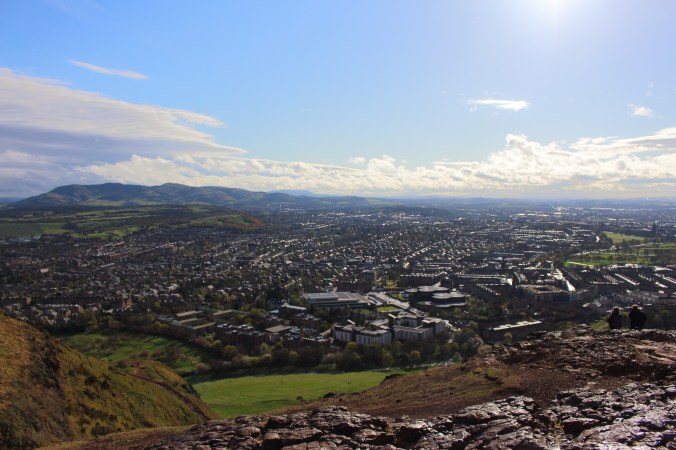
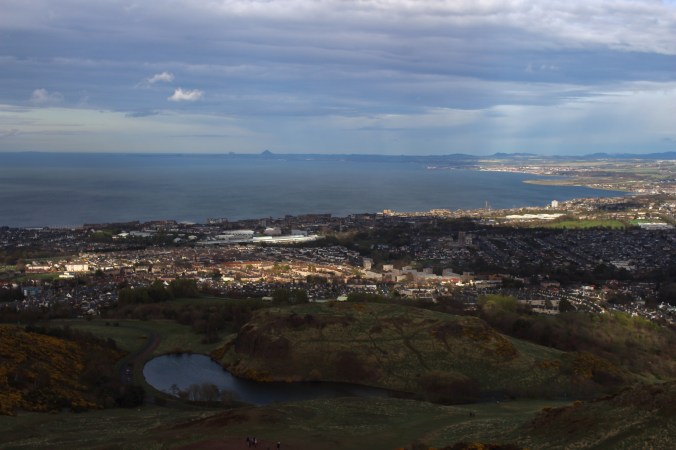
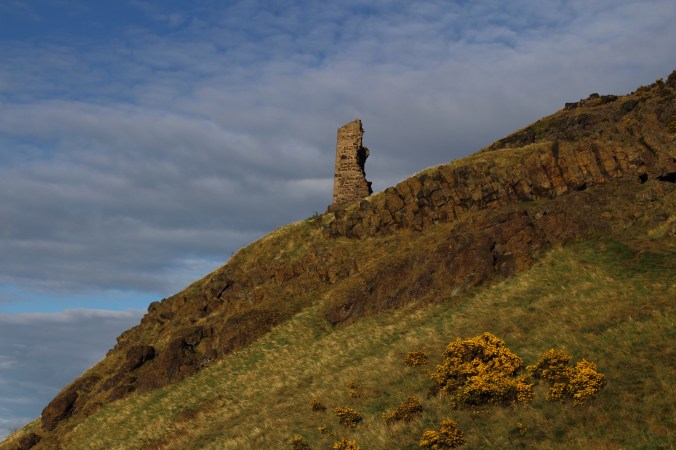
In the afternoon, we climbed Arthur’s Seat. By the time we got to the top, the rain had subsided, and the summit rewarded us with spectacular views of the city (Arthur’s Seat is 250.5m heigh) — albeit it was exceptionally windy!

image2-3IMG_6565IMG_6581

We made our way down —

IMG_6598

— and ended up in Holyrood Park, where we spent what seemed to be an eternity watching swans at Dunsapie Loch.

IMG_6628 (swan)

What surprised me about them was how incredibly docile they were; whenever I’m in the vicinity of swans, I expect to be attacked every minute, but these guys didn’t even bat an eyelid at the presence of humans (in fairness, they were also quite fat and moved around very reluctantly preferring to stay on the same spot instead, which may have been part of the reason). Last year, a tragedy struck the Swan Lake of Holyrood Park, when Sally, one of the long-term residents of the loch, vanished; it was suspected that she was eaten by a fox. Sally and Sid had been together for 16 years (this is way longer than any of my relationships!), and poor Sid was left without his mate.

And now, the freaky thing I mentioned at the start of this post. We went out for dinner in the evening to a lovely restaurant called First Coast. So we are sitting at this cute little table by the window and are eagerly awaiting our food (I am, as usual, starving). And then this guy stumbles in. He is in his late 50s or early 60s, quite well dressed but really quite drunk. He exchanges a few words with one of the waitresses (who is politely asking him to leave) and then notices me and J. He says: “You are in love. You should get married. I see these things”. I smile and he leaves the restaurant. A few seconds later, he is on the other side of the window, and he is is pointing his finger at me and desperately trying to tell me something. A elderly lady then appears and attempts to help him stay on his feet. Seconds later, he bursts into the restaurant again, full steam ahead to our table. He tries to get close to me, looks at me intensely and says things along the lines of: “I need to warn you. I can see danger. There is danger ahead. He [pointing at J] will be driving. There will be an accident. A car crash. Trouble is coming”. The restaurant staff tried to make him leave the restaurant, which he does eventually, repeating all the time: “I just want to warn her”. I am unsure if you can tell from the image below, but I’m more than a little shaken by the experience as we are supposed to rent a car the next day to drive up to the Highlands (with J being the only driver on the license).

image1-7

The waitress apologises and we tell her there is nothing to worry about; I then ask her whether she’s ever seen the guy before. “No, — she says, — it’s the first time he’s come here. He said he was a psychic from Glasgow”. Seeing that I’m in no better state after her explanation, J decides to go and find the guy. He leaves. After some 5 minutes, he is back. Turns out the elderly lady we saw earlier and some other guy were helping him to get home. J asked the lady (who said she knew him) whether the guy was a psychic and she said he was not. The guy himself did not give J any further information.

And so ended day 1 of our wee Scottish adventure.

A good husband…

This Easter holiday we are spending in Scotland.

I like analogies — in fact, my brain often goes on a frolic and begins generating them unprompted. When it comes to travelling your own country, the analogy is a relationship which is past its initial infatuation stage (for which a specific term exists in the Russian language: the “cholocalate-flowers period”) and, slowly but surely and more often than not,  partners start taking each other for granted. Similar with travelling: you know how much there is  to see and experience in your “neck of the woods” but somehow keep putting that trip to the Lake District off, because “it will always be there”.

This Easter, we have decided to be “a good husband” and spend 5 days in Scotland (and not in Tuscany… sigh!). I have tried to use my very basic IT skills to reproduce our itinerary below: basically, 2 nights in Edinburgh, a night in Ullapool and a night in Portree, moderate levels of driving and extensive exploration (fingers crossed for the weather).

Scotland_17

The Scotland trip got me all nostalgic about the first time I visited Edinburgh, which was back in 2006. I have even dug out a picture from that “era” below (please don’t ask me why I was wearing what I was wearing); a true rara avis that is! At the time, I was a poor A Level student, so, as a money saving measure (the tickets cost under £10, if my memory serves me well), I convinced my friend to go to Edinburgh from London on Megabus. It was an overnight trip; I think my logic was that we would sleep on the bus and arrive in Edinburgh fresh and rested. But when the bus broke down in the middle of the Scottish countryside in the early hours of a cold December morning and we had to wait for the next Megabus bus to pick us up (that bus had its own passengers, so we spent the rest of the journey standing), I understood very well the meaning of the proverb “A cheapskate pays twice as much”. Still, an invaluable experience and part of being young, broke and travel-hungry!

image1-6


Tales of One Thousand and One Nights, a Modern Take: From Khiva to Navoi (Part I: Khiva)

Uzbekistan.

Uzbekistan was probably the first item which was added to my long, and, to date, ever growing, “places I want to go to” list. This is because Uzbekistan is my historical motherland (or, rather, one of) — my grandma on my mum’s side was born there, and my grandparents lived and raised my mum there before moving to a country with more moderate temperatures in the early 1980s. It would then come as no surprise that I grew up listening to stories about Uzbekistan and, in particular, about the city of Navoi, where my family lived. My granddad was an exceptional story teller and, being the impressionable child that I was, I resolved very early on that I wanted to — had to! — go and see Uzbekistan with my own eyes.

Fast forward 20 years, and it didn’t take me long to figure out where to go on my qualification leave in September 2014 — Uzbekistan, naturally — this was such a perfect opportunity. (Now, because, as people who know me would say, I don’t do things by halves, I also decided to use the time I had to travel around two other “Stans” — Kyrgyzstan and Tajikistan — but this is a story for another time.)

We took a domestic flight from Tashkent to Urgench (having flown into Tashkent from Bishkek in Kyrgyzstan a few hours earlier); Urgench is only a short drive away from Khiva.

I remember getting into our guest house when we just arrived, emptying a bag of local money, the som, and being like, wow, I feel rich. It’s easy to feel rich in Uzbekistan as the exchange rate is so skewed (not in favour of the som). But it certainly cheered me up after my experience at the Tashkent airport earlier that day, where I was locked in a room for several hours and interrogated in a rather intense manner by a rather questionable local official on the status of my visa (don’t ask…) and nearly missed my flight to Urgench as a result. Still, all part of the experience.

image1-2

The Khiva old town breathes history. And no wonder — according to one legend, Shem, one of Noah’s sons, once found himself wondering in the desert alone and fell asleep. He dreamt of 300 burning torches (I’m unsure as to the significance of this number…). When he woke up, Noah believed it was an omen and founded a city with outlines in the form of a ship mapped out based on the arrangement of the torches in his dream. Shem then ordered to dig a well called Kheyvak (apparently, loosely translated as “sweet water”) — hence Khiva’s name.

Beautiful, right? The history of Khiva and other khanates which later came to form the modern day Uzbekistan is somewhat less poetic and often pretty brutal. Khiva became a very important city on the Silk Route and replaced Urgench as the capital of the Khanate of Khiva in the early 17th century. Khiva had also the largest slave market in Central Asia. From Captain Nikolai Muraviev’s 1871 book “Journey to Khiva through the Turkoman Country”:

“The Masters have full powers of life and death, but as the death of a slave is a direct loss of property, they generally chastise light offences by cutting off an ear, or thrusting out an eye, or by stabs with a dagger in some not vital part. […] [These] minor punishments […] are inflicted for meditated desertion, but should a slave be suspected a second time of the intention of running away, he is nailed by an ear to a post or to the house door, and left for three days without food or drink, exposed to the jibes of passers by. Few survive this, as they enter on the ordeal with frames already exhausted by toil and hardship.” 

Khiva’s history is also fascinating because of its role in the so-called “Great Game” — a geopolitical confrontation between the Russian Empire and Great Britain to gain control over India, Afghanistan and Central Asia in the 19h century. Peter Hopkirk’s book “The Great Game — On Secret Service in High Asia” offers a fascinating account of this period. Here is one snapshot…

The origins of the Great Game can be traced back to Peter the Great, who decided to tap into Central Asia’s rich gold reserves and also, through gaining control over the region, obtain access to the resource-rich India, which he knew the British had already been getting their hands on. To further his ambitions, he sent a diplomatic mission led by Prince Bekovich to Khiva (the Khan of Khiva had approached Peter a few years prior with an offer to become his vassal in exchange for Russia’s protection, but Peter had little interest at the time). The mission reached Khiva after a long and exhausting journey in 1717. The mission’s couriers delivered lavish gifts for the Khan, courtesies were exchanged and the Khan then told Bekovitch that it would not be possible to accommodate the whole mission in Khiva and proposed that it be split up into several groups and housed in nearby villages. Conscious of not causing offence the Khan by his refusal, Bekovith agreed. Big mistake, of course — everyone but a small minority of Russians was slaughtered and Bekovitch’s head was severed, stuffed with straw and left on display. Just over 100 years later, Captain Nikolai Muraviev embarked on another mission to Khiva, one of the aims of which to was to collect as much military and economic intel about the Khanate as possible (“Journey to Khiva through the Turkoman Country” contains detailed descriptions of, amongst other things, Khiva’s strongholds, artillery and trade relations).

So yes, brutal but fascinating past, but I’m getting a bit carried away.

Khiva’s old town (Ichan-Qala, added to the UNESCO heritage list in 1990) is beautiful and extremely well preserved, where the past feels almost like now. It is surrounded by a 7-8m high fortification wall and has an abundance of beautiful mousaleums, madrasas and mosques.

image5

You can actually walk all around the perimeter of the wall. As I like climbing things, I of course couldn’t miss the opportunity.

image7

The most iconic building in Khiva is probably Kalta Minor Minaret, pictured below with some lovely local ladies in the foreground trying to protect themselves from the sun (the heat was unbearable… the temperatures were somewhere in the early forties but it felt much hotter because of humidity). The minaret isn’t actually that old in comparative terms — the construction finished in 1855. I really liked the blue tiling but was also a little puzzled but just how fat the minaret looked. Apparently, it was supposed to be 70 metres high, but when Muhammad Amin Khan was killed, the construction stopped at the current 29 metres, which explains the visual imbalance.

image2

Bazaars (markets) are very prevalent across Central Asia and, dare I say, are part of the local culture.  A bazaar offers pretty much everything under the sun (at the end of my Central Asia trip, I found myself in Osh in Kyrgyzstan; Osh has the largest market in Central Asia and it was truly mind blowing, both in terms of its vastness and the available choice — I bought my grandma a camel hair belt to ease her back aches). But a bazaar is much more than your bog-standard western supermarket — it’s a place where people socialise, exchange news and have a bit of fun haggling (amusingly, haggling terrifies many Westerners, but it is a form of art).

image4

It goes without saying that no travel experience is complete without savouring local delicacies and, as I write this, I can almost smell the aromas of my grandma’s plov. We did try local plov — nowhere near as good as my grandma’s, but still excellent.

image6

A uniquely Khivan experience was trying on and eventually purchasing — we couldn’t resist — local wool hats, known as chugirmas. I should emphasise that these hats are unique to the region and not found anywhere else in Uzbekistan (as far as I know), so are really quite special. Here is interesting blog post explaining the history and use of chugirmas. A lot of this was unknown to us at the time, but we were told that these hats help regulate the temperature of the head and can — should, in fact — be worn in both cold and hot weather.  And so we did put this to test that same afternoon, in the intolerable heat (see my note above). We climbed up the great wall of Khiva and wore our chugirmas. Our heads were surprisingly very comfortable, and the chugirma challenge was successfully passed.

image8

In the evening, we got on an sleeper train to take us to the young city of Navoi.

To be continued.


Welcome to WIMO

“Why then the world’s mine oyster

Which I with sword will open.”

William Shakespeare, The Merry Wives Of Windsor

xxx

“The world is your oyster”, — one wise man used to tell me. And as I’ve grown older wiser, I’ve slowly come to realise that he was right on point; that you can travel anywhere, and do and be anything, you want. This blog is about the former — the places I’ve been to, people I’ve met and things I’ve experienced there.  The start point is April 2017, though the intention is to also reminisce a little about past adventures.

Things have moved on a little since the Elizabethan era, so I let me open the world not with a sword, but with a word, and let this process be facilitated by a combination of planes, trains , marshrutkas (this may give you a flavour of what’s to come!) and social media outlets.

Happy oystering. 🙂