Day 2 of exploring Scotland. Our plan for day 2 and 3 was The Highlands (random fact: anyone who is not a Highlander, including Lowland Scots, is called Sassenach).
In the morning, J checked Traffic Scotland, which warned us that there were icy and snowy conditions on the road from Dingwall to Ullapool, and drivers were accordingly advised to exercise caution. In the context of the previous night, it sounded rather sinister; I was still feeling somewhat jittery after the Glasgow psychic experience.
However, we proceeded as planned, picked up our rental car from the airport and drove north, into the realms of of the unknown, into Greater Scotland.
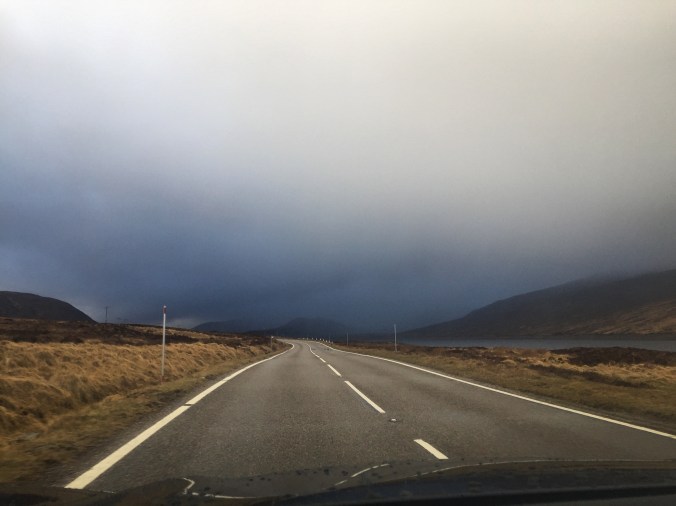
Despite my desire to explore a few castles, we somehow ended up taking the wrong turn for both Stirling Castle and Scone Palace (supposedly inadvertently, but J, who was driving, is a lot less keen on castles).
We drove through the Cairngorms National Park and stopped in Aviemore to have lunch in a lovely little place called Mountain Cafe, which served delicious hamburgers. Aviemore is a tiny town. Albeit conveniently located on many travellers’ route, the town did not seem remarkable in any way —
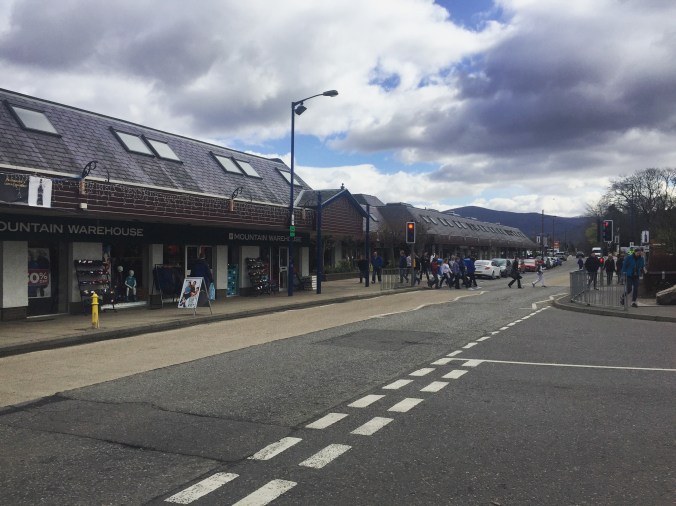
— but I couldn’t shake off the feeling that Aviemore and the surrounding territory bore an uncanny resemblance to the South Island in New Zealand.
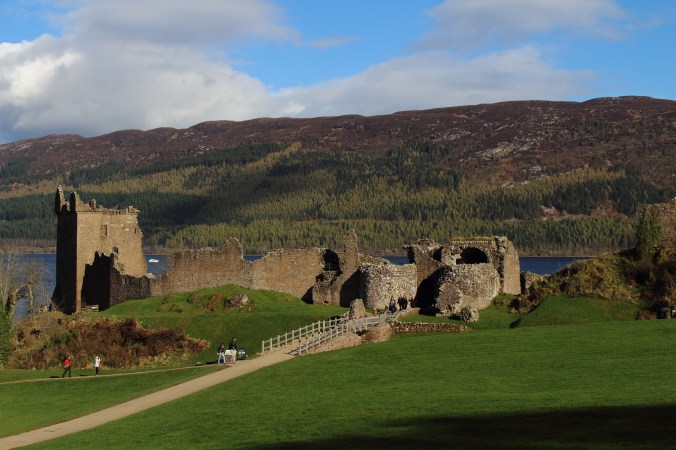
My insistence to seek out a Scottish castle eventually paid off; after Aviemore, we drove to Urquhart Castle, which sits, picture-perfect, beside Loch Ness. Having arrived half an hour or so before the closing time, we did not have long to look around, but it was enough to get a feel of the place.
The early history of the castle — much like, it seems to me, a lot of Scottish history — is intrinsically linked with the history of the Scottish resistance against the English: during the Wars of Independence, the castle passed back and forth between the opposing sides; in fact, the first documentary record of Urquhart dates back to 1296, when Edward I (Edward Longshanks), who already made an appearance in Part I of this post, captured it. When Robert the Bruce (also featured in Part I) became King of Scots in 1306, the castle returned back under Scottish control and, after he died in 1332, was the only Highland castle to hold out against the English. During the 15th and 16th centuries, the power struggle continued, but with different protagonists this time: the Crown and MacDonald Lords of the Isles (more on the MacDonald clan soon to come in Part III of this post), who raided the castle on several occasions.
Turbulent history aside, another part — an integral part, I should say — of Loch Ness is, of course, the legendary mythical creature a.k.a. the Loch Ness Monster a.k.a. Nessy. Of course, everyone knows about Nessy — but in case you are interested, there have been many reported sightings on the monster with the earliest one in 565, when, the story goes, Saint Columba, an Irish monk, made Nessy flee when he made the sign of the cross and said: “Go no further. Do not touch the man. Go back at once”. There was then a spike in reported sightings in 1933, the year considered to be the beginning of the Loch Ness Monster phenomenon as we know it today. One the most famous ones was a sighting by Mr and Mrs Spicer on 22 July that year, described by Mr Spicer as “an abomination”; to give you a bit more flavour:
“First we saw an undulating sort of neck, a little thicker than an elephant’s trunk. It did not move in the usual reptilian fashion but, with three arches, it shot across the road until a ponderous body about four feet high came into view. […] It has been a loathsome sight. […] It was terrible. Its colour, so far as the body was concerned, could be called a dark elephant grey. It looked like a huge snail with a long neck.”
And look at these dark, mysterious waters of the loch — don’t they excite imagination; can’t you just about make out the bend of her elongated body under the water surface? 😉
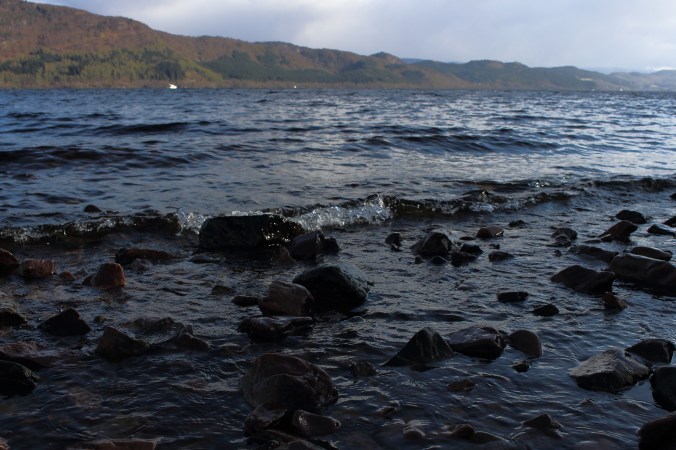
The Official Loch Ness Monster Sightings Register, set up by the Official Loch Ness Monster Fan Club in 1996, is, as the name suggests, a register of all recorded Nessie sightings to date — 1,083 in total, with 7 in 2016. The last reported sighting was around 8 months ago, in August last year (when not even one, by two creatures were said to have been spotted near the shore). This is rather concerning to Nessie-ists: Gary Campbell, the keeper of the Register, told the Scotsman that he was “worried” by the lack of sightings, adding: “she seems to have disappeared”. Poor Nessie — but given that she’s apparently been around since at least 565… nothing lasts forever.
Everyone knows about Nessy — what I did not know, however, is that the lake monster phenomenon is not unique to Loch Ness. Every self-respecting lake, it seems, has one — see this Wikipedia list. Be it as it may, Nessy is a considerable source of money to the Scottish tourist industry: in 2012, it was estimated that 1 million people visited Loch Ness and the surrounding area each year, bringing c.£25m to the economy — and 85% of the visitors, were, apparently, attracted by the Nessie phenomenon. In recognition of this, in May 2014, a seminar called “Monster Marketing” was held in Inverness, exploring how businesses in the Highlands could cash in on Nessie further.
…
Having looked around and tickled our imagination with the Loch Ness Monster myth, we continued our drive north, to Ullapool, and what a stunning drive it was! I was perpetually in awe of the ever changing terrain — from rugged to forest, etc. And as if acting in unison, the weather kept changing too — from sunny to rainy and back to sunny again; truly, one experiences 4 seasons in a day in Scotland! It was a bit like being on a merry-go-round, if I can allow myself to indulge in an analogy for a second …
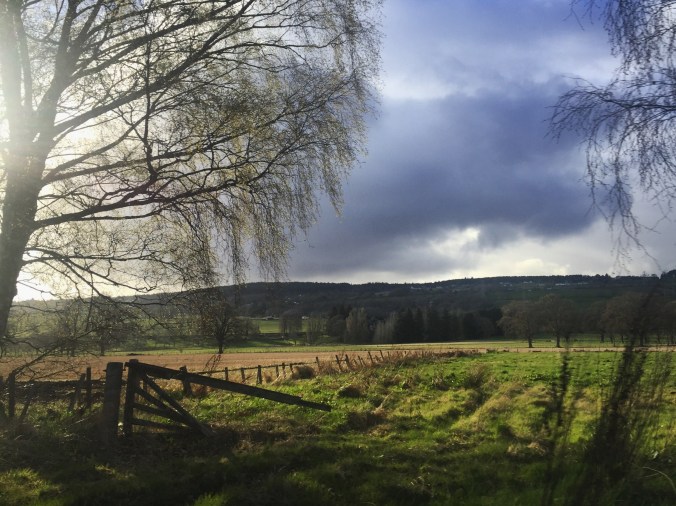
Another thing I kept noticing was an abundance of animals — primarily sheep, all bearing a mark, either red or blue — as well as how healthy the animals looked, grazing happily all day long come what may: sun, rain, fog… It added to the idyllic picture of Scotland that had already begun forming in my head.

While we are on the subject of perception, Scotland also felt to me like a different country; albeit I accept I haven’t travelled that much around England, Scotland felt more rugged, more wild and more unexplored.
…
As the sun was setting down, we finally saw Ullapool, a pretty village on the shores of Loch Broom, beautiful in the rays of the evening sun.
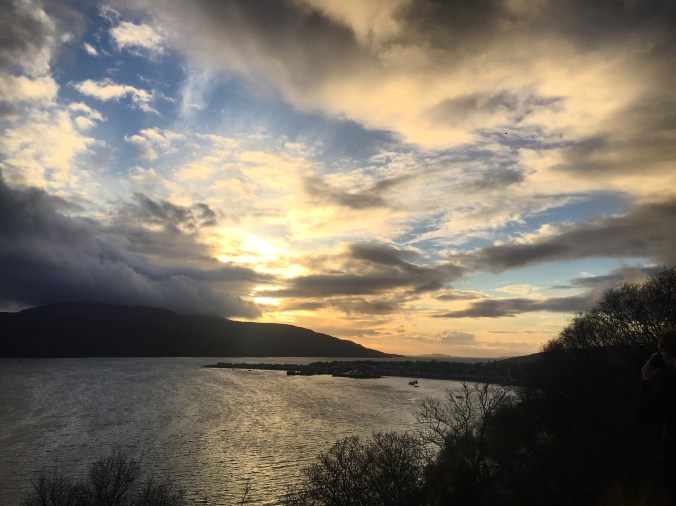
Ullapool was our home for the night.
…
The next morning, we carbed up over breakfast in our B&B —

— appreciated the Ullapool harbour views —
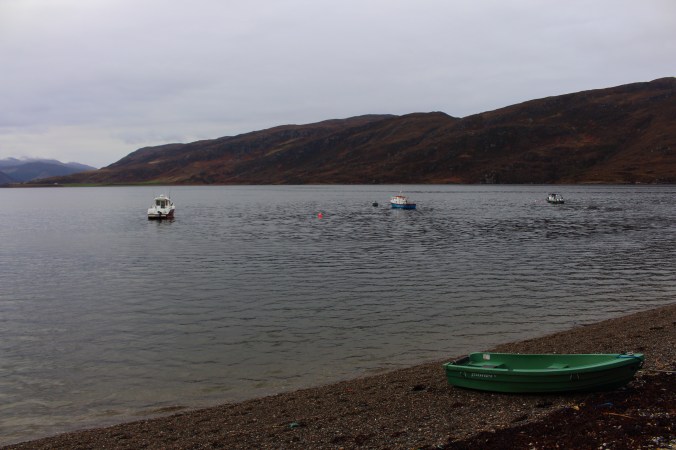
— and then embarked on a drive north, towards Kylesku. We did not drive all the way to Kylesku, but the drive was stunning nevertheless. The scenery was beautiful, in a kind of austere way: little houses scattered around, mountain peaks still covered in snow… Although the weather was grey that morning, it complimented the scenery and enhanced it in a beautiful way.

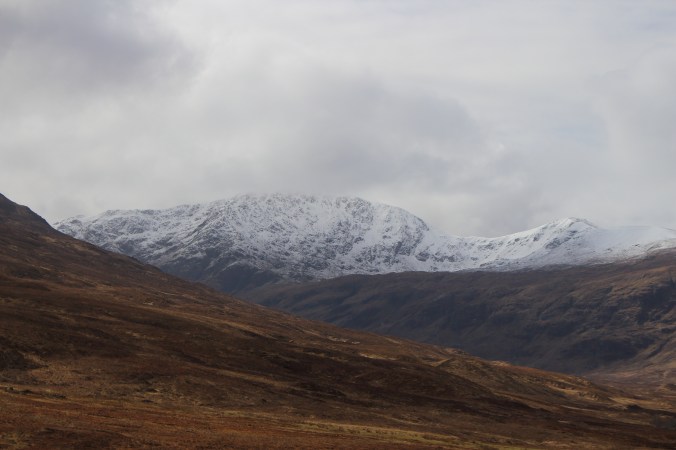

We stopped and admired the “Deep freeze mountains” for a while —
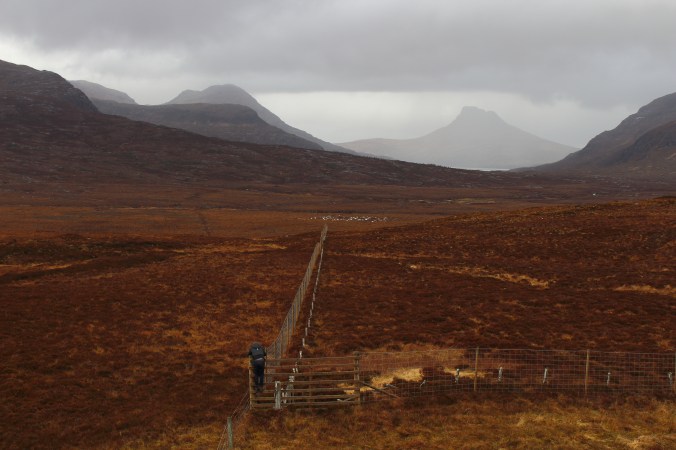
— and learnt from the tourist sign that Scotland was covered by ice until around 15,000 years ago, when the climate warmed and the ice melted rapidly. It then returned 2,000 years ago in the form of glaciers (like the ones in Iceland today). This was what formed this beautiful landscape.
We had to turn around to drive back to Ullapool (on the side of the road, we saw a sign offering “eggs for sale”… only in Scotland :-)), conscious of the limited amount of time we had. I must say that, as the trip progressed, I became more and more astonished that such a relatively small territory has so much diversity — countless lochs, lochans (=small lakes), linns (=waterfalls), glens, braes (=hills), burns (=streams), denes (=valleys), mountains, castles… Our itinerary was certainly a wee too ambitious for the 5 days we had in our disposal, and more than a few times my excitement about a potential destination was unceremoniously curtailed by J: “Can’t go — tight timetable”.
We returned to Ullapool and took the road towards Gairloch. The road was lonely and beautiful — it felt like it was only us in the whole world.

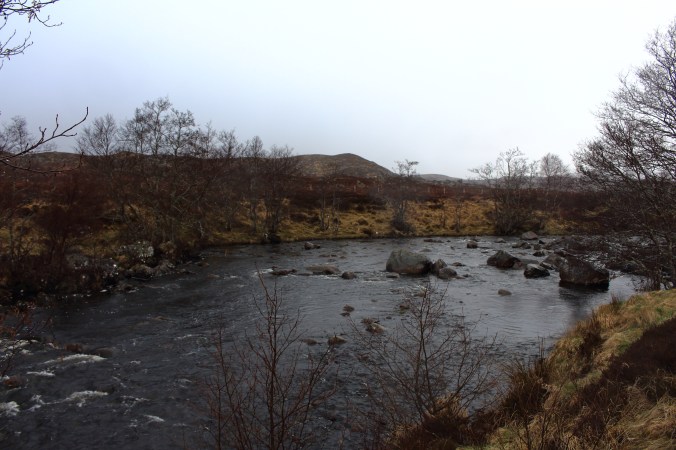
We stumbled across a beautiful stream, fast and bursting with energy, and for a while just watched the water move.

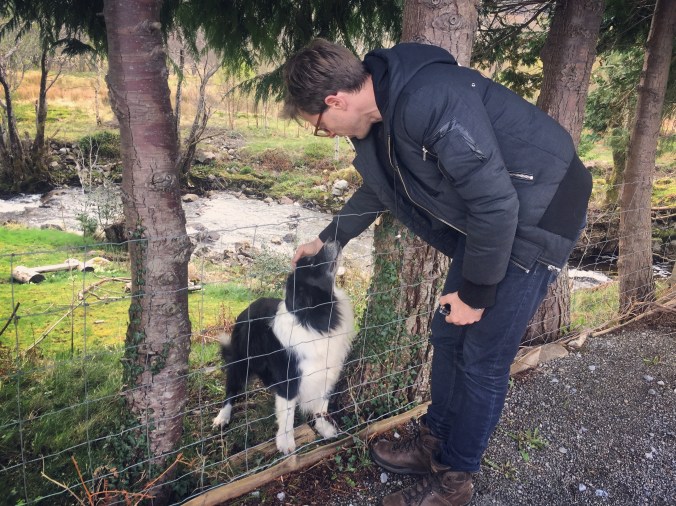
And then we made friends with a local dog. 🙂
…
The landscape changed again when began driving along the coast line, which offered some stunning views. The downside, of course, was that everything took us x3 as long as Google Maps predicted, because we constantly kept pulling over and jumping out of the car to take pictures… It’s like like the theatre: on every turn of the road, the curtain is drawn, and a new set reveals itself, and I can’t contain my excitement and ask J to pull over again, because, inexplicably, The Minch looks completely different from the moment ago when it was framed by different mountain peaks, and oh how disappointing it is that a picture is never as good as the reality (well, at least not in the case of the photos I take — in the case of the talented J, a picture really does speak a thousand words)…


…
We briefly stopped in Gairloch and then continued south east towards Kinlochewe —

— intending to do a little hike around Loch Clair. My feet were itching for a hike — I brought my hiking boots on this trip; these babies are German-made, proper, sturdy hiking shoes; they may not look very appealing, but they are so comfortable, light yet stable at same time, that you feel invincible wearing them, you feel like you can conquer any mountain… And — spoiler alert, this will be covered in Part III — they were put to a serious test the following day when we climbed a munro on the Isle of Skye —
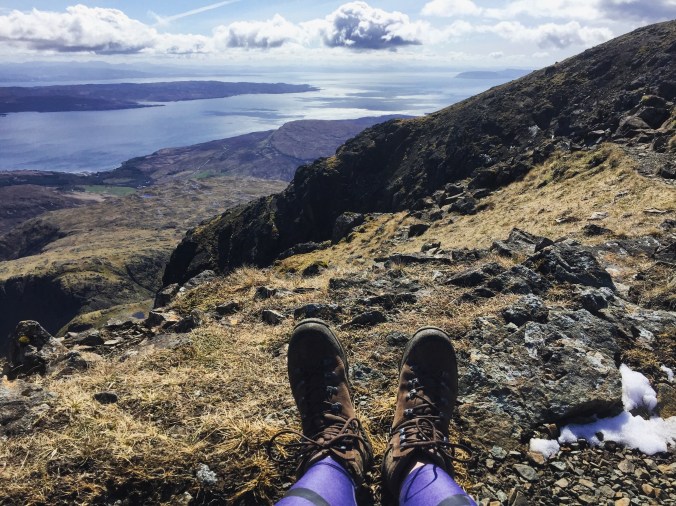
— once again, totally rocking it.
Meanwhile, Loch Clair offered a much more tamed hike — but what views! The mirror-like surface of the loch reflecting the surrounding trees and mountain peaks, with the music of the little streams gurgling quietly in the background…


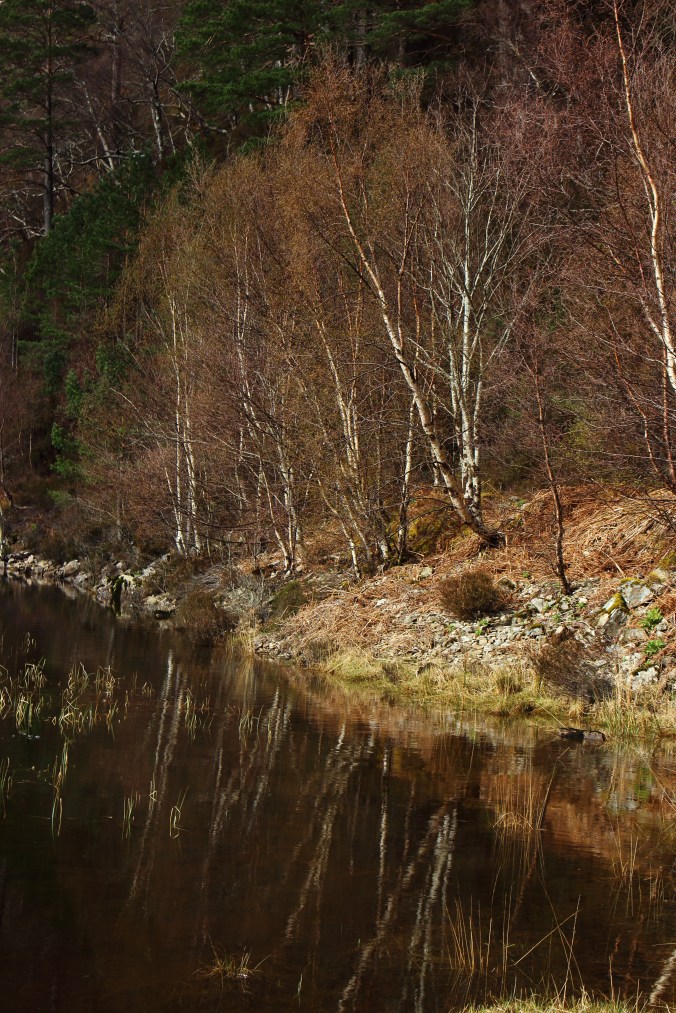
Loch Clair also appeared to have an abundance of moss —

— and when I mentioned the medicinal properties of moss to J, he sounded very surprised (but I remember very vividly being given a decoction of moss, together with milk and honey, as a child to treat my never ending coughs!).
…
After the Loch Clair hike, we continued driving south towards the Isle of Skye. There was a fair bit of traffic now — and roads in that part of Scotland are, albeit nominally two-way, very narrow, so there are “passing places” everywhere (a widening of the road allowing two cars to pass), leading to the inevitable slowing down of the traffic flow.
We saw a rainbow on the way —
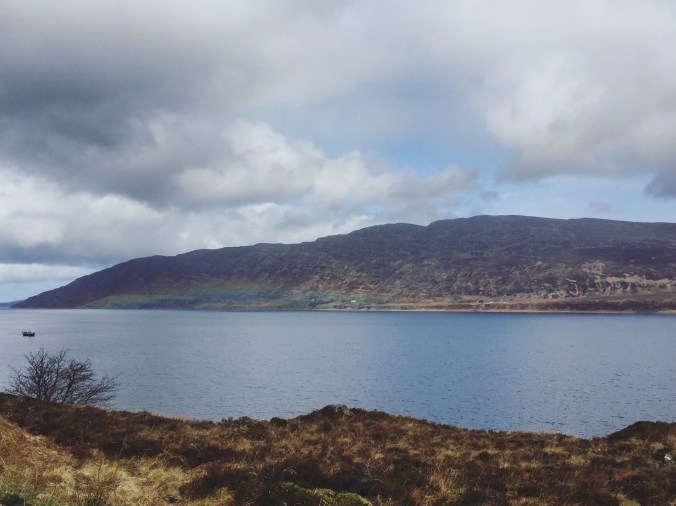
— and another one later that day after we had crossed over to Skye —
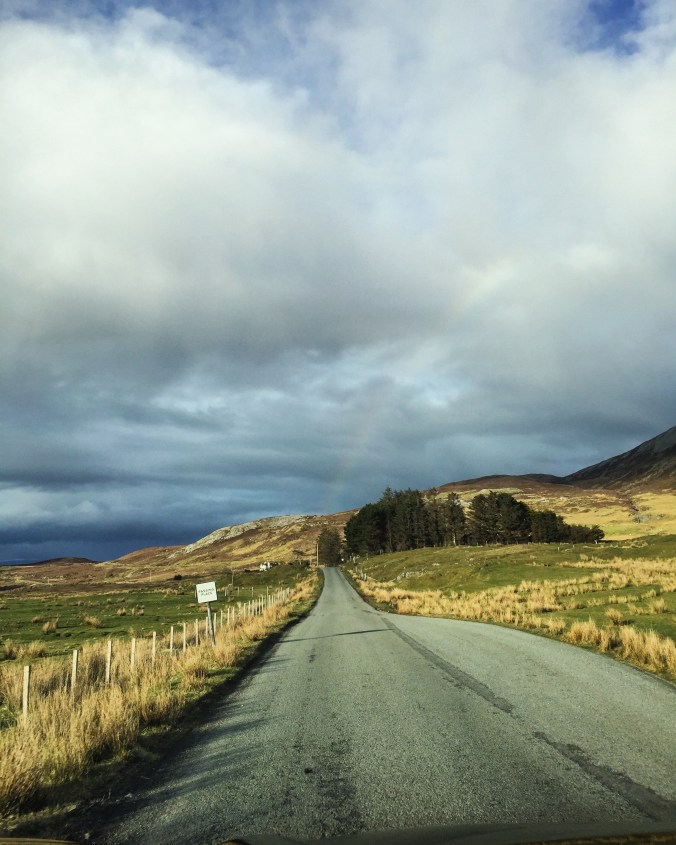
— and I’m certain we saw at least one other rainbow in the course of the trip. I even began wondering whether there was something about Scotland that made the formation and appearance of rainbows more likely — Google offered no confirmation of this hypothesis, but I came across this stunning shot of a white rainbow, which appeared in Scotland in November last year.
….
Finally, after some more driving, we saw the Skye Bridge in the distance. The Skye Bridge was built in 1995; before then, the only way to get to the island was by ferry. (For those who are interested, the Skye Bridge was the subject of controversy because one was required to pay a toll to cross the bridge (the tolls were based on the fares of the ferries the bridge had replaced). Until the toll system was finally abolished in 2004, the Skye Bridge was the most expensive toll bridge in Europe.)
As we drove towards the bridge —
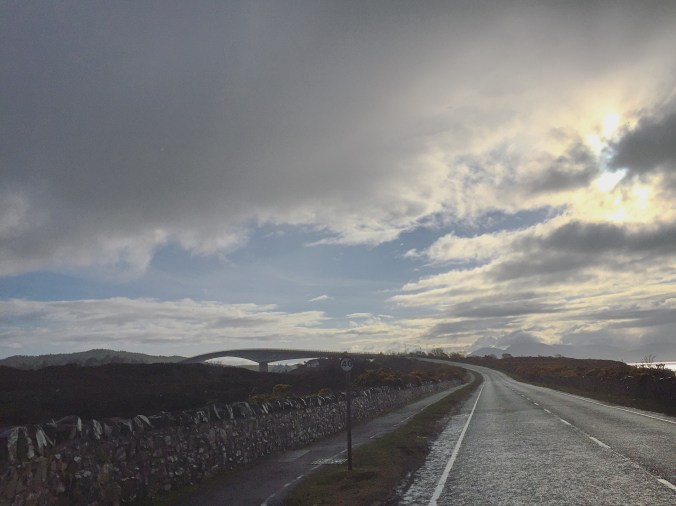
— I couldn’t help but indulge in yet more — admittedly, somewhat corny — analogies: the Skye Bridge was a bridge that was about to take us into the skies (where is my favourite monkey-covering-up-its-mouth emoji when I need it most..!). In fairness though, it was a glorious early evening after the rain, and the Skye Bridge looked almost magical against the backdrop of the surrounding mountains.
 WIMO
WIMO 